
What Is Narcolepsy?
Quick Answer
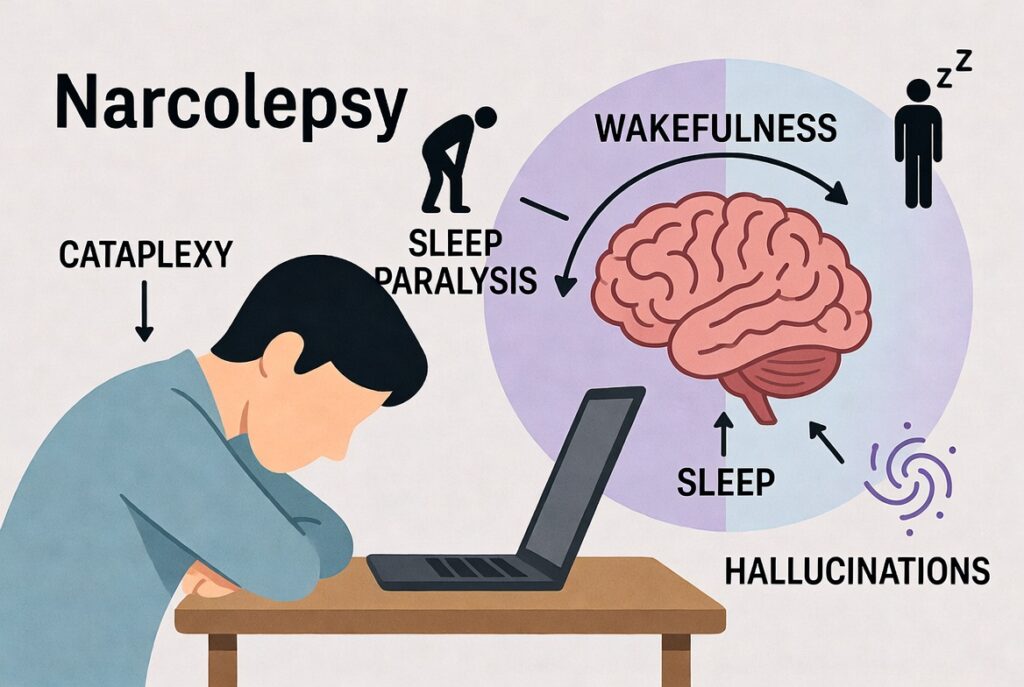
Narcolepsy is a chronic neurological sleep disorder that affects the brain’s ability to regulate sleep and wakefulness. People with narcolepsy may experience excessive daytime sleepiness, sudden episodes of muscle weakness known as cataplexy, sleep paralysis, hallucinations, and disrupted nighttime sleep.
Although narcolepsy is a lifelong condition, proper diagnosis and treatment can help many individuals manage symptoms and maintain an active lifestyle.
In This Guide
Key Facts About Narcolepsy
- Narcolepsy is a neurological sleep disorder that affects sleep-wake regulation.
- Excessive daytime sleepiness is the most common symptom.
- Symptoms often begin during adolescence or early adulthood.
- Narcolepsy can affect school, work, relationships, and daily activities.
- There are two primary types of narcolepsy: Type 1 and Type 2.
- While there is currently no cure, treatments are available to help manage symptoms and improve quality of life.
Narcolepsy at a Glance
| Feature | Description |
|---|---|
| Disorder Type | Chronic Neurological Sleep Disorder |
| Main Symptom | Excessive Daytime Sleepiness |
| Common Age of Onset | Teens to Early Adulthood |
| Primary Types | Type 1 and Type 2 |
| Diagnosis | Sleep Specialist Evaluation and Sleep Testing |
| Treatment Options | Medications, Lifestyle Strategies, and Sleep Hygiene |
What Is Narcolepsy?
Narcolepsy is a long-term neurological disorder that disrupts the normal sleep-wake cycle. Individuals with narcolepsy often struggle to remain awake during the day despite obtaining what appears to be adequate sleep at night.
The condition occurs because the brain has difficulty regulating transitions between sleep and wakefulness. As a result, certain elements of sleep can occur unexpectedly during waking hours, leading to symptoms that interfere with daily activities and overall well-being.
Narcolepsy is frequently misunderstood and may go undiagnosed for years before patients receive a proper evaluation and diagnosis.
How Common Is Narcolepsy?
Narcolepsy is considered a relatively uncommon sleep disorder, but researchers believe many cases remain undiagnosed or are mistaken for other conditions.
Because symptoms can develop gradually, individuals may attribute their excessive sleepiness to stress, lifestyle factors, or poor sleep habits. Early recognition and evaluation by a sleep specialist can improve diagnosis and treatment outcomes.
Main Symptoms of Narcolepsy
Excessive Daytime Sleepiness
Excessive daytime sleepiness is the hallmark symptom of narcolepsy. People with narcolepsy often experience overwhelming drowsiness throughout the day and may have difficulty staying awake during routine activities.
Cataplexy
Cataplexy involves sudden episodes of muscle weakness triggered by strong emotions such as laughter, excitement, surprise, or anger. Cataplexy is most commonly associated with Narcolepsy Type 1.
Sleep Paralysis
Sleep paralysis occurs when an individual temporarily cannot move or speak while falling asleep or waking up. Although the episode may only last a short time, it can be frightening.
Hallucinations
Some people with narcolepsy experience vivid dream-like experiences when falling asleep or waking up. These hallucinations may involve visual, auditory, or sensory perceptions.
Disrupted Nighttime Sleep
Despite experiencing significant daytime sleepiness, many individuals with narcolepsy have fragmented sleep at night and may wake frequently throughout the night.
Types of Narcolepsy
Narcolepsy Type 1
Narcolepsy Type 1 is characterized by excessive daytime sleepiness and cataplexy. Many individuals with this form of narcolepsy have reduced levels of hypocretin, a brain chemical involved in maintaining wakefulness.
Narcolepsy Type 2
Narcolepsy Type 2 involves excessive daytime sleepiness without cataplexy. Symptoms may overlap with Narcolepsy Type 1 but generally follow a different clinical presentation.
What Causes Narcolepsy?
The exact cause of narcolepsy remains unclear. Researchers believe that a combination of genetic, neurological, autoimmune, and environmental factors may contribute to its development.
In some individuals, narcolepsy is associated with the loss of neurons that produce hypocretin, a neurotransmitter that helps regulate wakefulness and sleep stability.
Ongoing research continues to explore the biological mechanisms involved in narcolepsy and potential future treatments.
How Is Narcolepsy Diagnosed?
Diagnosis typically involves a comprehensive assessment by a sleep medicine specialist.
The evaluation process may include:
- Review of medical history
- Symptom assessment
- Physical examination
- Overnight polysomnography (sleep study)
- Multiple Sleep Latency Test (MSLT)
- Additional testing when necessary
Because symptoms may overlap with other sleep disorders, obtaining an accurate diagnosis is essential for developing an effective treatment plan.
Treatment Options for Narcolepsy
While there is currently no cure for narcolepsy, several treatment approaches can help manage symptoms and improve daily functioning.
Medication Management
Healthcare providers may prescribe medications designed to reduce excessive daytime sleepiness, manage cataplexy, and improve overall sleep quality.
Sodium Oxybate and Narcolepsy
Sodium oxybate is one of the most recognized treatment options used in the management of narcolepsy. It may be prescribed for individuals experiencing excessive daytime sleepiness and cataplexy associated with the condition.
Unlike some medications that primarily promote wakefulness during the day, sodium oxybate works by helping improve nighttime sleep quality. Better nighttime sleep may contribute to improved daytime alertness and reduced symptom burden in certain patients.
Because narcolepsy affects sleep regulation, therapies that improve sleep architecture can play an important role in comprehensive symptom management. Treatment decisions should always be made by qualified healthcare professionals who can evaluate individual needs, medical history, and treatment goals.
Lifestyle Modifications
Lifestyle strategies can complement medical treatment and help individuals manage symptoms more effectively.
Examples include:
- Maintaining a consistent sleep schedule
- Scheduling planned naps
- Avoiding sleep deprivation
- Managing stress
- Practicing healthy sleep habits
Sleep Hygiene
Good sleep hygiene may help support overall symptom management and improve sleep quality.
Supportive Care
Educational resources, workplace accommodations, school support services, and family involvement can all contribute to improved quality of life.
Living With Narcolepsy
Living with narcolepsy often requires ongoing symptom management and lifestyle adjustments. The condition can affect education, employment, driving, social activities, and personal relationships.
Many individuals find success through a combination of medical treatment, support systems, healthy routines, and symptom-management strategies.
With proper care and guidance, people with narcolepsy can pursue their goals and maintain productive, fulfilling lives.
Related Sleep Disorders
Several sleep disorders may share symptoms with narcolepsy or require similar diagnostic evaluation.
Idiopathic Hypersomnia
A disorder characterized by excessive daytime sleepiness without the classic features of narcolepsy.
Sleep Apnea
A sleep-related breathing disorder that can contribute to fatigue and impaired alertness.
Insomnia
A condition involving difficulty falling asleep, staying asleep, or obtaining restorative sleep.
Circadian Rhythm Sleep Disorders
Disorders involving disruptions to the body’s internal biological clock.
Frequently Asked Questions
What causes narcolepsy?
Researchers believe narcolepsy may involve genetic, neurological, autoimmune, and environmental factors.
Is narcolepsy curable?
There is currently no cure for narcolepsy, but treatment can help manage symptoms effectively.
What is the difference between Narcolepsy Type 1 and Type 2?
Type 1 includes cataplexy, while Type 2 does not.
Is narcolepsy hereditary?
Genetics may contribute to risk, but most cases are not directly inherited.
Can children develop narcolepsy?
Yes. Narcolepsy can develop during childhood, adolescence, or adulthood.
How is narcolepsy diagnosed?
Diagnosis typically involves clinical evaluation and specialized sleep testing.
Does narcolepsy affect life expectancy?
Narcolepsy itself is generally not considered a life-shortening condition.
Can people with narcolepsy drive?
Driving recommendations vary depending on symptom control and local regulations.
Is narcolepsy considered a disability?
In some situations, narcolepsy may qualify as a disability depending on its impact on daily functioning.
Can lifestyle changes help manage narcolepsy?
Yes. Lifestyle modifications often work alongside medical treatment to improve symptom management.
Conclusion
Narcolepsy is a chronic neurological sleep disorder that affects the brain’s ability to regulate sleep and wakefulness. Symptoms such as excessive daytime sleepiness, cataplexy, sleep paralysis, hallucinations, and disrupted nighttime sleep can significantly impact everyday life.
Although there is currently no cure, early diagnosis and appropriate treatment can help many individuals successfully manage symptoms and improve quality of life. Treatment plans may include medications such as sodium oxybate, lifestyle modifications, sleep hygiene practices, and ongoing support from healthcare professionals.
Understanding narcolepsy is the first step toward seeking appropriate care, accessing available treatment options, and living a healthier, more productive life.
Medical Disclaimer
The information provided on this website is intended solely for educational and informational purposes and should not be considered medical advice, diagnosis, or treatment recommendations.
Always consult a qualified physician, sleep specialist, or licensed healthcare provider regarding any medical condition, symptoms, or treatment options. Never ignore professional medical advice or delay seeking medical care because of information found on this website.
Information regarding sodium oxybate and other medications is provided for educational purposes only. Treatment eligibility, prescribing decisions, medication safety, and healthcare recommendations should always be determined by a qualified healthcare professional based on an individual’s specific medical circumstances.
Last Updated
May 2026
Content Category
Narcolepsy Education
Reviewed By
Medical Content Review Team