For years, people with narcolepsy who needed an oxybate medicine had one big trade-off. The medicine could ease cataplexy and daytime sleepiness. But it also came with a heavy sodium load.
That changed in 2020.
Xywav oral solution for narcolepsy arrived as a different kind of oxybate. It works in a similar way to older products, but it contains far less sodium. For people who must watch their blood pressure or heart health, that detail can matter a lot.
In this guide, you will learn what Xywav is, how it differs from other oxybates, how it is used, what the risks are, and what to ask your doctor.
What Is Xywav?
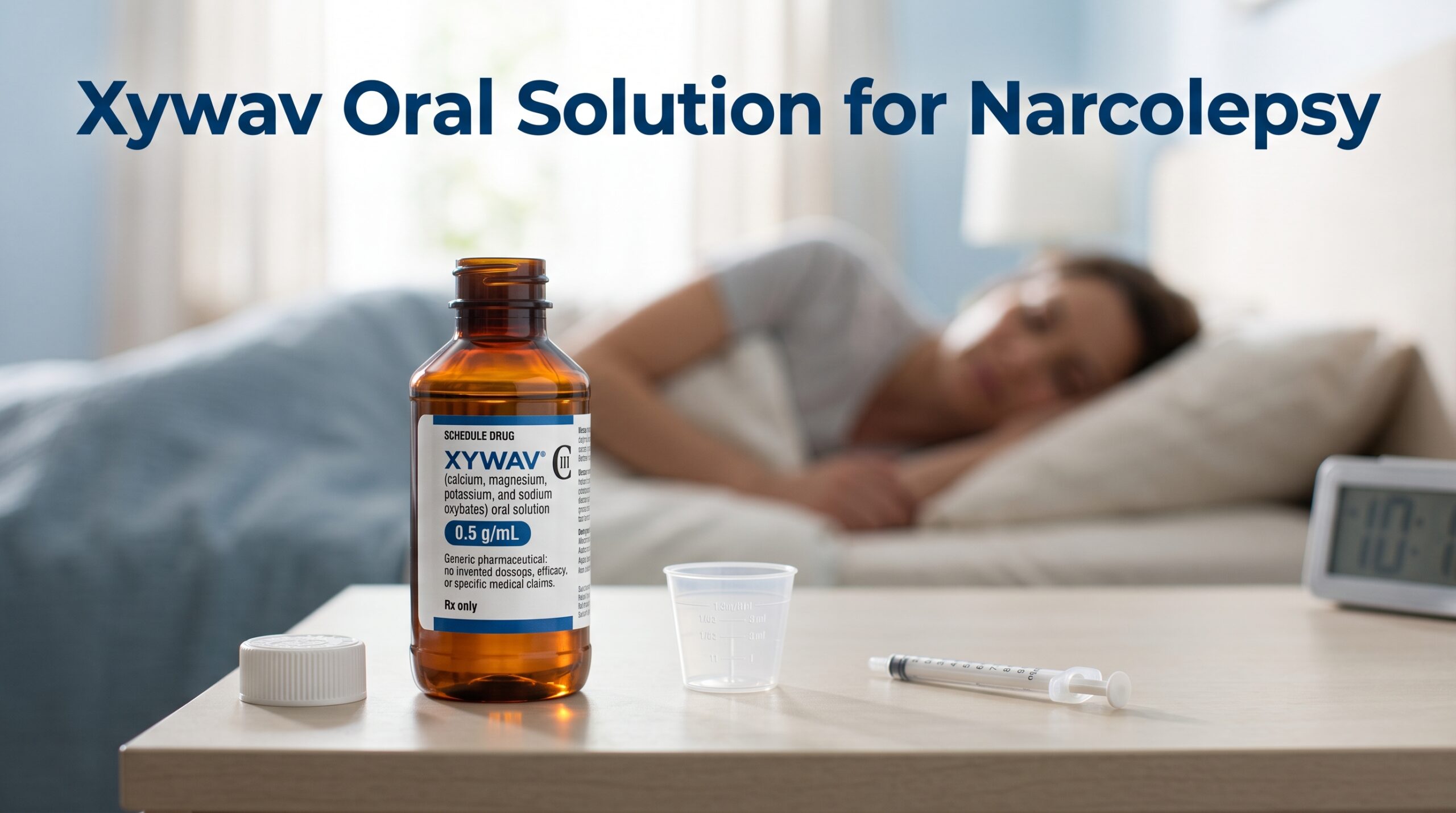
Xywav is a prescription oral solution used to treat symptoms of narcolepsy. It belongs to a class of medicines called oxybates.
Quick Facts
- Form: oral solution (liquid) taken at night
- Active ingredients: calcium, magnesium, potassium, and sodium oxybates
- Used for: cataplexy or excessive daytime sleepiness (EDS) in narcolepsy
- Also used for: idiopathic hypersomnia in adults
- Maker: Jazz Pharmaceuticals
- Access: prescription only, through a restricted safety program
What Makes Xywav Different?
Xywav contains four types of oxybate salts instead of only sodium oxybate. As a result, it has about 92% less sodium than Xyrem. This is the key feature that sets it apart.
Who Is It Approved For?
The FDA approved Xywav for people aged seven and older with narcolepsy who have cataplexy or excessive daytime sleepiness. In 2021, it was also approved for adults with idiopathic hypersomnia.
Understanding Narcolepsy and Why Treatment Matters
Narcolepsy is a long-term neurological condition. The brain cannot regulate the sleep-wake cycle normally.
Common Symptoms
- Excessive daytime sleepiness: overwhelming drowsiness during the day.
- Cataplexy: sudden muscle weakness, often set off by emotion.
- Sleep paralysis: brief inability to move when falling asleep or waking.
- Hypnagogic hallucinations: vivid images while dozing off.
- Disrupted nighttime sleep: frequent awakenings.
How Narcolepsy Affects Daily Life
Untreated narcolepsy can affect:
- School and work performance
- Driving safety
- Relationships and social life
- Emotional health
- Overall quality of life
Treatment Goals
The main goals are to reduce sleepiness, lower cataplexy attacks, and improve daily function. Doctors choose treatments based on symptoms, health history, and preferences.
How Does Xywav Work?
Like other oxybates, Xywav is a central nervous system (CNS) depressant. Researchers do not fully understand its exact mechanism in narcolepsy. It appears to improve the structure of nighttime sleep, and this may help daytime alertness over time.
The Four-Salt Formula
The medicine contains these salts of oxybate:
- Calcium
- Magnesium
- Potassium
- Sodium
The mix lowers the sodium while keeping the active oxybate part.
Why Lower Sodium Matters
High sodium intake can raise blood pressure and strain the heart over time. Lowering the sodium from the medicine can leave more room in the daily diet. This may be especially useful for people with:
- High blood pressure
- Heart failure
- Kidney disease
- Doctor-advised low-sodium diets
Sodium Content: Xywav Compared to Other Oxybates
Let us put the numbers side by side. Values are approximate. Check the current label for exact amounts.
| Nightly Dose | Xywav (approx. sodium) | Xyrem (approx. sodium) |
|---|---|---|
| 6 g | About 87 mg | About 1,100 mg |
| 9 g | About 131 mg | About 1,640 mg |
What These Numbers Tell Us
A person on 9 g of Xyrem receives more than 1,600 mg of sodium from the medicine alone. On Xywav, the same dose supplies about 131 mg. That is a big difference.
A Note on Other Minerals
Xywav also contains potassium, calcium, and magnesium. These matter for some people, especially those with kidney problems or certain heart conditions. Your doctor will weigh this when choosing a treatment.
How Is Xywav Taken?
Always follow your prescriber’s instructions and the official medication guide. Here is a general overview.
For Narcolepsy: Two Nightly Doses
For narcolepsy, Xywav is typically taken in two doses:
- The first dose is taken at bedtime while sitting in bed.
- The second dose is taken about 2.5 to 4 hours later.
You must stay in bed after each dose. Many people use an alarm to wake for the second dose.
Preparing the Dose
- Measure the dose using the supplied syringe.
- Dilute it with water in the provided container.
- Take it on an empty stomach, as directed by the label.
- Prepare both doses before getting into bed.
Typical Dosing Pattern
For adults, treatment usually starts at a lower total nightly dose, such as 4.5 g. The doctor increases it in small steps over several weeks. The usual range is 6 g to 9 g per night.
Children receive weight-based doses. Dosing for idiopathic hypersomnia follows a separate schedule. Your doctor will tell you exactly what applies to you.
Important Timing Tips
- Eat well before bedtime, as advised on your label.
- Set clear alarms.
- Keep the second dose within reach.
- Never take extra doses without medical advice.
Benefits of Xywav for Narcolepsy
Why do doctors and patients consider Xywav?
1. Reduced Cataplexy
Clinical research showed that oxybate treatment can lower the number of cataplexy attacks. That means fewer sudden episodes of muscle weakness.
2. Better Daytime Alertness
Many people experience less daytime sleepiness. Studies used measures such as sleepiness scales and wake-time tests.
3. Lower Sodium Intake
The reduced sodium content is a clear practical advantage for those who need to limit salt.
4. Improved Daily Function
With better symptom control, many people find it easier to work, study, drive more safely under medical guidance, and enjoy social activities.
5. Option for More Than One Condition
Xywav is also approved for idiopathic hypersomnia in adults. This can be helpful for people with related sleep conditions.
Possible Side Effects of Xywav
Xywav shares many side effects with other oxybates.
Common Side Effects
- Nausea
- Headache
- Dizziness
- Decreased appetite
- Vomiting
- Bedwetting
- Anxiety
- Sleepwalking in some people
Serious Risks and Boxed Warning
Xywav carries a boxed warning.
CNS Depression
The medicine can cause slowed breathing, strong sedation, and loss of consciousness. The risk rises with alcohol or other sedating drugs.
Abuse and Misuse
Oxybate is related to GHB, which is illegally misused. Misuse can be life threatening.
Other Important Warnings
- Depression and suicidal thoughts: report mood changes right away.
- Breathing problems: especially in people with sleep apnea or lung disease.
- Complex sleep behaviors: such as sleepwalking, which may cause injury.
- Potassium and mineral content: extra care is needed for people with certain kidney or heart conditions.
When to Seek Emergency Help
- Very slow or stopped breathing
- Inability to wake the person
- Seizure or severe confusion
- Thoughts of self-harm
- Suspected overdose
Call your local emergency number if any of these occur.
What to Avoid While Taking Xywav
Alcohol
Do not drink alcohol. Combining it with Xywav can cause dangerous drowsiness and breathing trouble.
Other Sedating Medicines
Sleep pills, opioids, and some muscle relaxants can add to the sedating effect. Tell your doctor about every medicine and supplement you take.
Certain Drug Interactions
Some medicines can change how the body handles oxybate. One example is valproate, which may raise oxybate levels and require dose changes. Never adjust doses on your own.
Driving and Risky Tasks
Do not drive or use machinery after a dose. Wait until you know how the medicine affects you, and follow your doctor’s guidance.
Rare Contraindication
Xywav should not be used by people with succinic semialdehyde dehydrogenase deficiency.
The Safety Program (REMS)
Xywav is available only through a REMS program.
What Does It Involve?
- Certified prescribers
- Patient enrollment
- Dispensing by a certified pharmacy
- Education about safe use and storage
Why It Exists
The program helps reduce risks such as misuse, diversion, and accidental exposure. It adds some steps, but it protects patients and communities.
Who May Be a Good Candidate for Xywav?
Only a qualified healthcare professional can decide. People who may be considered include:
- Those with narcolepsy and cataplexy
- Those with narcolepsy and excessive daytime sleepiness
- Adults with idiopathic hypersomnia
- Patients who need to limit sodium
Who Needs Extra Caution?
- People with kidney problems
- People with high potassium, calcium, or magnesium levels
- Those with a history of depression or substance misuse
- Anyone with breathing or sleep apnea issues
- Older adults on multiple medicines
Xywav vs. Other Options: A Brief Look
Xywav vs. Xyrem
Both are twice-nightly oxybate liquids for narcolepsy. The key difference is sodium content. Xywav has far less.
Xywav vs. LUMRYZ
LUMRYZ is a once-nightly extended-release sodium oxybate. It offers a simpler schedule. Xywav offers a lower sodium load. The best fit depends on your needs.
Xywav vs. Non-Oxybate Medicines
Other narcolepsy treatments include wake-promoting medicines and stimulants. They work differently and are often used for daytime sleepiness. Doctors may combine treatments or choose one based on symptoms.
Tips for Using Xywav Safely and Effectively
Build a Night Routine
- Prepare both doses and place them within reach.
- Use the toilet before the first dose.
- Clear the bedroom floor of clutter.
- Set two reliable alarms.
Protect Your Home
- Store the medicine in a locked place.
- Keep it away from children and visitors.
- Never share your medicine.
Track Your Progress
Keep a simple diary of:
- Daytime sleepiness levels
- Cataplexy attacks
- Side effects
- Mood and sleep quality
Share it with your care team.
Keep Your Appointments
Regular follow-up lets your doctor adjust the dose and watch for problems.
Questions to Ask Your Doctor About Xywav
- Is a lower-sodium oxybate right for my health?
- What dose should I start with?
- How will potassium, calcium, and magnesium affect me?
- What should I do about missed doses?
- Which side effects should prompt a call right away?
- How will we know if the medicine is working?
- What does my insurance cover?
Common Myths About Xywav
Myth 1: “Low sodium means no sodium.”
Xywav still contains some sodium. It has far less than older sodium oxybate products, but not zero.
Myth 2: “Lower sodium means fewer risks overall.”
Not exactly. Xywav lowers the sodium load, but it still carries the same boxed warnings about breathing and misuse.
Myth 3: “It is a different type of drug.”
Xywav is in the same oxybate class. Its active compound is the same, in a different salt mix.
Myth 4: “I can mix it with a glass of wine.”
Never. Alcohol and oxybates should not be combined.
Conclusion
Xywav oral solution for narcolepsy gives people another way to treat cataplexy and excessive daytime sleepiness. Its biggest advantage is a much lower sodium content than older oxybate products.
Here is a quick summary:
- Xywav is an oxybate with calcium, magnesium, potassium, and sodium salts.
- It has about 92% less sodium than Xyrem.
- It is taken in two doses for narcolepsy.
- It carries serious warnings and needs a REMS program.
- Alcohol and sedating medicines must be avoided.
If sodium is a worry for you, talk to your sleep specialist. Together, you can decide whether Xywav fits your health and your daily life.
Frequently Asked Questions (FAQ)
What is Xywav used for?
Xywav is a prescription medication used to treat certain sleep disorders. It is approved for cataplexy or excessive daytime sleepiness in people aged seven years and older with narcolepsy. It is also approved to treat idiopathic hypersomnia in adults, a condition that causes persistent daytime sleepiness. The medication works through the central nervous system to help manage these symptoms. A healthcare professional determines whether Xywav is appropriate based on the patient’s diagnosis, symptoms, and medical history.
How much less sodium does Xywav have than Xyrem?
Xywav contains approximately 92% less sodium than Xyrem at equivalent doses. This difference can be important for people who need to limit their daily sodium intake for medical reasons. Depending on the prescribed dose, Xywav may provide roughly 87 to 131 mg of sodium per night, although the exact amount varies. Xyrem contains sodium oxybate, which contributes more sodium to the diet. Patients with high blood pressure, kidney problems, or certain cardiovascular conditions should discuss the sodium content of their medication with their healthcare provider.
Is Xywav the same as Xyrem?
Xywav and Xyrem belong to the same medication class and both contain oxybate compounds, but they are not identical products. Xyrem contains sodium oxybate, whereas Xywav contains calcium, magnesium, potassium, and sodium oxybates. This difference gives Xywav a substantially lower sodium content while maintaining its therapeutic purpose for approved conditions. Both medications can cause serious side effects and require careful adherence to prescribing instructions. A healthcare professional can help patients understand the differences and determine which medication best fits their treatment needs.
How is Xywav taken?
For narcolepsy, Xywav is generally taken orally in two nightly doses, with the first dose taken at bedtime and the second taken 2.5 to 4 hours later. The medication must be diluted with water according to the official preparation instructions before it is consumed. Patients should follow the prescribed dosing schedule and avoid taking extra doses or changing the amount without medical guidance. Food can affect how the medication is absorbed, so it is generally taken at least two hours after eating. The dosing schedule for idiopathic hypersomnia may differ, so patients should follow the instructions provided by their healthcare professional.
Does Xywav have side effects?
Yes, Xywav can cause side effects, and their severity may vary from person to person. Common side effects include nausea, headache, dizziness, vomiting, and bedwetting. Some patients may also experience fatigue, confusion, or mood-related changes during treatment. More serious risks include slowed or difficult breathing, reduced alertness, depression, and misuse or abuse. Patients should seek medical advice if they experience concerning symptoms and inform their healthcare provider about all medications and supplements they use.
Can I drink alcohol with Xywav?
No, alcohol should not be consumed while taking Xywav because the combination can be dangerous. Both alcohol and Xywav can depress the central nervous system, potentially increasing sedation and impairing alertness. Taking them together may also increase the risk of serious breathing problems, loss of consciousness, and other life-threatening complications. Patients should also discuss sedatives, opioids, and other medications that can cause drowsiness with their healthcare provider. Always follow the medication guide and ask a pharmacist or prescriber if you are unsure whether another substance is safe to use.
Can children take Xywav?
Yes, Xywav is approved in the United States for certain narcolepsy symptoms in children aged seven years and older. Treatment should be managed by a qualified healthcare professional experienced in evaluating and treating pediatric sleep disorders. The prescribed dose is determined using the child’s body weight and the official dosing guidelines, with adjustments made when medically appropriate. Parents and caregivers should monitor the child for side effects, changes in behavior, and unusual daytime sleepiness. They should also follow the preparation, storage, and administration instructions carefully and never change the dose without consulting the child’s healthcare provider.
Do I need a special program to get Xywav?
Yes, Xywav is available through a restricted Risk Evaluation and Mitigation Strategy (REMS) program because of its serious safety risks. Patients generally need a certified prescriber and a certified pharmacy to obtain the medication under the program’s requirements. The process helps ensure that patients and caregivers understand the risks, correct administration, and precautions associated with treatment. Patients may need to complete enrollment procedures and review important safety information before receiving their prescription. For the latest requirements, contact the prescribing healthcare professional or the dispensing pharmacy.