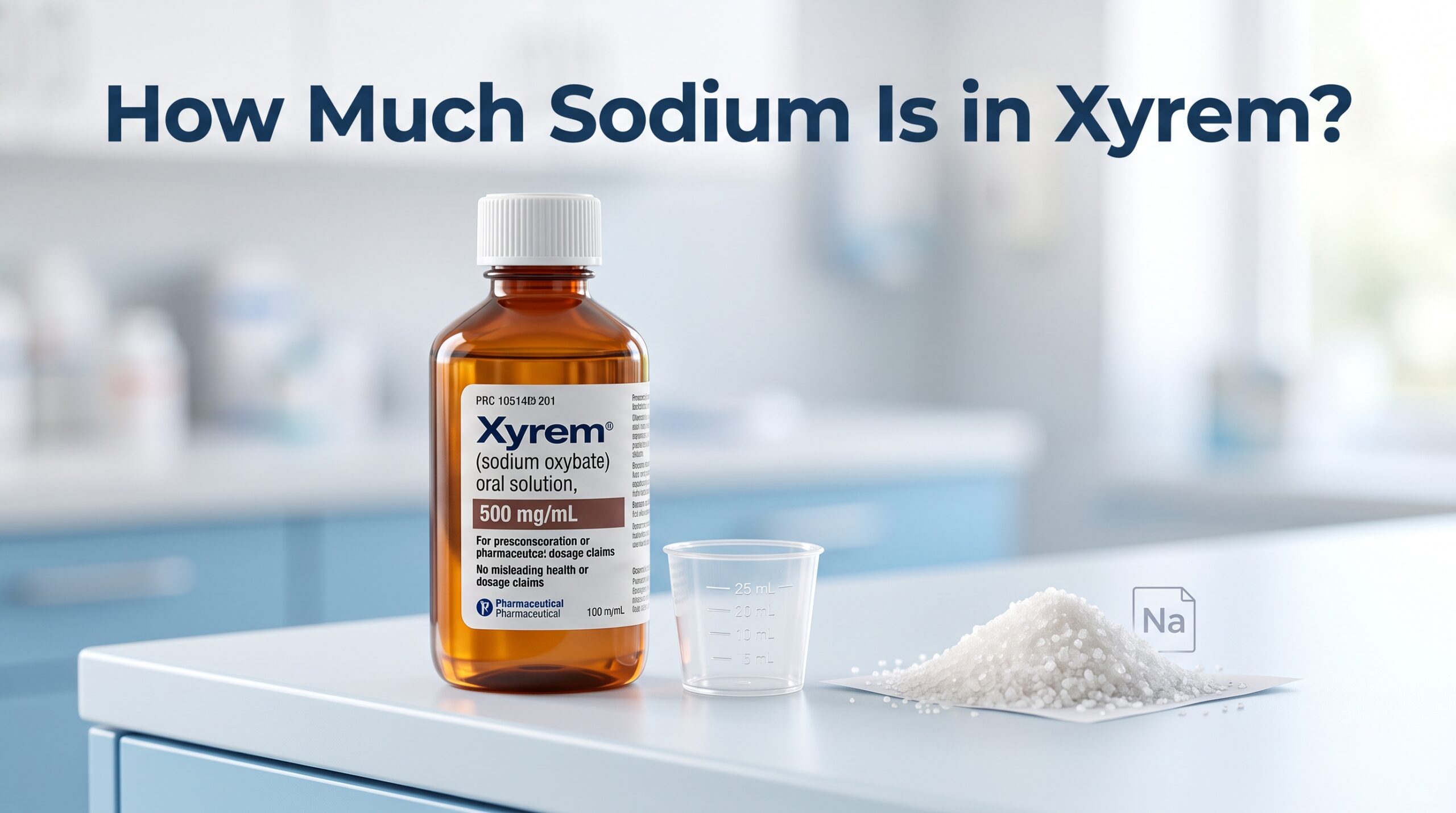
Imagine you follow a low-salt diet to the letter. You read every label. You skip the chips. Then you learn that your nightly narcolepsy medicine may carry as much sodium as a fast-food meal.
That surprise is real for many people who take Xyrem.
If you are asking how much sodium is in Xyrem, you are asking an important health question. The answer affects your heart, your blood pressure, and your long-term wellbeing. This guide gives you clear numbers, simple explanations, and practical steps. You will learn what the sodium content means, who should pay extra attention, and what to discuss with your doctor.
How Much Sodium Is in Xyrem?
Xyrem (sodium oxybate) oral solution is a sodium salt. Sodium is part of the active ingredient itself. It is not a hidden additive.
According to the prescribing information, the sodium content rises with the dose. The figures below are approximate. Always check the current label for exact values.
| Total Nightly Dose | Approximate Sodium Content |
|---|---|
| 4.5 grams | About 820 mg |
| 6 grams | About 1,100 mg |
| 7.5 grams | About 1,370 mg |
| 9 grams | About 1,640 mg |
Key takeaway: Many adults on a typical dose receive roughly 1,000 to 1,600 mg of sodium each night from the medicine alone.
Why Is There Sodium in Xyrem at All?
The active compound is gamma-hydroxybutyrate (GHB). In its medicine form, it is bound to sodium to make a stable, water-soluble salt. That salt is called sodium oxybate.
So the sodium cannot be removed. It is part of the drug’s chemistry.
Sodium vs. Salt: A Common Mix-Up
People often use “salt” and “sodium” as if they mean the same thing. They do not.
- Sodium is a mineral.
- Table salt is sodium chloride. It is about 40% sodium by weight.
- Nutrition labels list sodium in milligrams.
So 1,100 mg of sodium from Xyrem is not the same as 1,100 mg of table salt. In salt terms, it is closer to 2.8 grams, or roughly half a teaspoon.
Why Sodium Content Matters for People Taking Xyrem
Sodium is essential. Your nerves and muscles need it. Your body also uses it to balance fluids.
The problem is not sodium itself. The problem is too much of it over a long time.
How Much Sodium Is Recommended Per Day?
Health bodies give general limits for adults:
- Ideal target: about 1,500 mg per day for many adults, especially those with high blood pressure.
- Upper limit: under 2,300 mg per day for the general adult population.
- Average intake: most adults in many countries eat well above these limits.
Now place the Xyrem numbers next to those limits. A 6 g nightly dose can supply about 1,100 mg. That is a large share of the daily budget before you eat breakfast.
Possible Health Effects of High Sodium Intake
Extra sodium may contribute to several concerns over time.
Blood Pressure
High sodium intake can raise blood pressure in many people. Sodium holds extra water in the blood vessels. More fluid means more pressure on artery walls.
Heart Health
Long-term high blood pressure strains the heart. It is linked with heart failure, stroke, and heart attack.
Fluid Retention
Some people notice swelling in the feet, ankles, or hands. Others notice puffiness or quick weight changes.
Kidney Strain
Kidneys filter extra sodium. A heavy, constant load may add stress, especially if kidney function is already reduced.
Who Needs to Be Extra Careful?
The prescribing information advises caution for people who are sensitive to sodium. That includes people with:
- Heart failure
- High blood pressure (hypertension)
- Reduced kidney function
- A doctor-ordered low-sodium diet
If any of these apply to you, tell your sleep specialist. Share your cardiologist’s advice, too.
Understanding Xyrem: A Short Background
To understand the sodium question, it helps to know what Xyrem is and how people use it.
What Is Xyrem Used For?
Xyrem is a prescription medicine for narcolepsy. It is approved to treat:
- Cataplexy: sudden loss of muscle tone, often triggered by strong emotions.
- Excessive daytime sleepiness (EDS): persistent, overwhelming sleepiness.
It is approved for adults and for children aged seven and older with narcolepsy.
How Is Xyrem Taken?
Xyrem is a liquid. It is taken at night, in two doses:
- The first dose is taken at bedtime while sitting in bed.
- The second dose is taken about 2.5 to 4 hours later.
Because the medicine causes sleep quickly, the dosing routine is strict. Your doctor and pharmacist will explain it in detail.
Safety Program and Restrictions
Xyrem carries a boxed warning about serious breathing problems, central nervous system depression, and abuse or misuse. It is available only through a restricted safety program called a REMS. Patients must be enrolled, and the medicine is sent through a certified pharmacy.
The sodium discussion sits alongside these bigger safety points. It is one part of a full risk-and-benefit picture.
Sodium Content at Different Xyrem Doses
Every person has a different dose. Doctors usually start low and adjust.
Typical Dosing Range
For adults, treatment often starts at 4.5 g per night. The dose may be raised in small steps over weeks. The usual maintenance range is 6 g to 9 g per night.
Children receive weight-based doses. Their sodium load is lower, but it still matters for small bodies.
Reading the Dose and Sodium Together
Use this simple way to think about it:
- A higher dose means more sodium.
- Sodium adds up with food, drinks, and other medicines.
- The nightly dose is a fixed, daily source. It does not change on days you eat well.
A Sample Day: Adding It All Up
Let us say a person takes 6 g of Xyrem nightly. That is about 1,100 mg of sodium.
Now add typical food:
- Breakfast with bread and cheese: about 600 mg
- A sandwich lunch with deli meat: about 1,000 mg
- A canned soup dinner: about 900 mg
The total would be around 3,600 mg. That is well above general advice. The medicine alone did not cause this. But it left much less room for food.
How to Manage Sodium While Taking Xyrem
You usually cannot lower the sodium inside the medicine. You can adjust the rest of your day.
Important: Do not change, skip, or split your dose to cut sodium. Only your prescriber should adjust treatment.
Step 1: Talk to Your Doctor
Start with your sleep specialist. Ask:
- Is my sodium intake from Xyrem a concern for me?
- Should my blood pressure be checked more often?
- Should I see a cardiologist or kidney specialist?
- Is there a lower-sodium treatment option for my situation?
Step 2: Track Your Daily Sodium
A simple log helps. You can use a notebook or a nutrition app.
- Write down the sodium from Xyrem based on your dose.
- Add sodium from every meal and snack.
- Compare your total to your doctor’s target.
Step 3: Choose Lower-Sodium Foods
Small swaps make a big difference.
Foods to Limit
- Processed and cured meats such as bacon, ham, and sausage
- Canned soups and sauces
- Instant noodles and frozen dinners
- Salty snacks, pickles, and olives
- Fast food and restaurant meals
Foods to Favor
- Fresh fruits and vegetables
- Unsalted nuts and seeds
- Plain whole grains such as oats, rice, and quinoa
- Fresh poultry, fish, and eggs
- Beans and lentils (rinse canned ones)
Step 4: Read Labels Like a Pro
Look for these clues on packaged foods:
- Sodium per serving in milligrams
- % Daily Value: 5% or less is low, 20% or more is high
- Serving size: many packages hold two or more servings
- Words like “low sodium,” “no salt added,” and “reduced sodium”
Step 5: Flavor Food Without Salt
Salt is not the only way to make food taste good. Try:
- Fresh garlic, ginger, and onion
- Lemon or lime juice
- Black pepper, paprika, and cumin
- Fresh herbs such as basil, cilantro, and parsley
- Vinegar for a bright, tangy note
Step 6: Stay Hydrated and Active
Drink water through the day unless your doctor limits fluids. Regular movement supports healthy blood pressure. Even a daily walk helps.
Monitoring Your Health on Xyrem
Sodium is one part of ongoing care. Regular check-ins keep you safe.
What to Monitor
- Blood pressure: at home or at clinic visits
- Weight and swelling: sudden changes may signal fluid retention
- Kidney function: through routine blood tests, if advised
- Sleep and mood: as part of overall treatment follow-up
Warning Signs to Report
Contact your healthcare provider if you notice:
- Rapid weight gain
- Swelling in legs, ankles, or hands
- Shortness of breath
- Persistent headaches or dizziness
- Very high blood pressure readings at home
If you have chest pain, severe breathing trouble, or confusion, seek emergency care.
Lower-Sodium Alternatives: What Are the Options?
Some people ask if another medicine could reduce the sodium load. The answer depends on the person.
Xywav (Low-Sodium Oxybate)
Xywav is a different oxybate product. It contains a mix of calcium, magnesium, potassium, and sodium oxybates. It has about 92% less sodium than Xyrem. Depending on the dose, this is roughly 87 to 131 mg of sodium per night.
It is approved for cataplexy or excessive daytime sleepiness in narcolepsy. It is also approved for idiopathic hypersomnia in adults. Other mineral contents differ, so it is not right for every person.
LUMRYZ (Once-Nightly Oxybate)
LUMRYZ is an extended-release sodium oxybate taken once at bedtime. It still contains sodium oxybate, so the sodium content per gram is similar to Xyrem. Its benefit is convenience, not a lower sodium level.
Non-Oxybate Medicines
Other narcolepsy treatments exist, such as wake-promoting agents and other classes of medicine. They work differently and have their own side effects. Your doctor can compare them with you.
Note: The best choice depends on symptoms, other health conditions, insurance, and personal preference. Never switch medicines without medical guidance.
Other Safety Points You Should Know
Sodium is only one part of Xyrem safety. Keep these points in mind.
Do Not Mix With Alcohol or Sedatives
Combining Xyrem with alcohol or other sedating medicines can cause dangerous drowsiness and breathing problems. Always tell every prescriber what you take.
Avoid Driving and Risky Tasks
Do not drive or operate machinery for at least six hours after taking a dose, or until you know how it affects you.
Store It Safely
Xyrem is a controlled substance. Store it in a secure place, out of reach of children and others.
Common Myths About Xyrem and Sodium
Myth 1: “The sodium is too small to matter.”
For many adults, the nightly dose is a large share of the daily limit. For people with heart or kidney conditions, it can matter a lot.
Myth 2: “I can wash the sodium out.”
The sodium is part of the active drug. Diluting it in water does not remove it.
Myth 3: “Only older adults need to care.”
High blood pressure can affect younger adults too. Good habits help at any age.
Myth 4: “A low-salt diet is enough.”
Diet helps, but it is only one tool. Regular monitoring and medical guidance matter just as much.
Questions to Bring to Your Next Appointment
Come prepared. Consider writing these down:
- What is my exact sodium intake from Xyrem at my dose?
- What daily sodium limit should I aim for?
- How often should my blood pressure be checked?
- Do my other medicines affect sodium or fluid balance?
- Would a lower-sodium option be safe and effective for me?
- Which signs mean I should call right away?
Conclusion
So, how much sodium is in Xyrem? The answer is a lot, relative to daily limits. A typical nightly dose of 6 g carries about 1,100 mg of sodium. A 9 g dose carries about 1,640 mg.
That does not mean Xyrem is unsafe for everyone. For many people with narcolepsy, it is a life-changing treatment. It simply means sodium should be part of the plan.
Here is a quick recap:
- Sodium is built into the active ingredient.
- Higher doses contain more sodium.
- People with heart, kidney, or blood pressure issues need extra care.
- A low-sodium diet and regular monitoring can help.
- Never change your dose on your own.
Speak with your healthcare team, ask direct questions, and build a plan that protects both your sleep and your heart.
Frequently Asked Questions (FAQ)
How much sodium is in a 6 gram dose of Xyrem?
A 6 g total nightly dose contains about 1,100 mg of sodium, according to the product labeling. Check the latest prescribing information for exact values.
Is the sodium in Xyrem harmful?
Sodium is not harmful in all cases. But a steady high intake may raise risks for people with high blood pressure, heart failure, or kidney problems. Your doctor can judge your personal risk.
Can I lower the sodium in Xyrem?
No. The sodium is part of the active drug. You can only manage the sodium you get from food and drinks.
Is there a low-sodium version of Xyrem?
Xywav is an oxybate medicine with about 92% less sodium than Xyrem. Whether it fits you depends on your condition and your doctor’s advice.
Should I stop taking Xyrem because of the sodium?
No. Do not stop or change your dose without talking to your prescriber. Stopping suddenly may cause problems, and your doctor can suggest safer options.
How can I check my blood pressure at home?
Use a validated upper-arm home monitor. Sit quietly for five minutes, keep your feet flat, and rest your arm at heart level. Record the numbers and share them with your doctor.