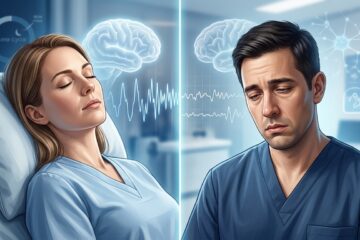
We have all experienced the occasional afternoon slump after a heavy lunch or a late night of work. Feeling a bit weary at 2:00 PM is a normal part of human physiology. However, there is a vast medical chasm between ordinary tiredness and sudden excessive daytime sleepiness (EDS)—an overwhelming, almost gravitational pull toward sleep that strikes without warning in the middle of a conversation, at your computer desk, or behind the steering wheel.
When patients search for “What causes sudden excessive daytime sleepiness?”, they are usually trying to make sense of two scary phenomena: either they have started experiencing acute, irresistible “sleep attacks” during the day, or they have developed a sudden, rapid-onset wave of severe hypersomnia over a matter of weeks or months despite spending seven to nine hours in bed every night.
Clinically, excessive daytime sleepiness is not a character flaw or a lack of motivation—it is a vital neurological warning sign affecting roughly 10% to 20% of the population. In this comprehensive medical guide, we will distinguish true sleepiness from physical fatigue, explore the 10 primary medical, neurological, and lifestyle causes of sudden excessive daytime sleepiness, and outline the exact diagnostic steps doctors use to uncover the root cause.
Sleepiness vs. Fatigue: The First Question Every Doctor Asks
Before investigating the causes of sudden daytime exhaustion, sleep specialists always draw a sharp line between true daytime sleepiness (hypersomnolence) and chronic physical or mental fatigue. While patients use the words “tired,” “exhausted,” and “sleepy” interchangeably, they point to completely different biological systems.
- What Is Fatigue? Fatigue is a lack of physical energy, muscle heaviness, and mental exhaustion (“brain fog”). If you have chronic fatigue—from conditions like anemia, hypothyroidism, fibromyalgia, or depression—you desperately want to lie down on the couch and rest your body, but if you close your eyes at 11:00 AM, you usually cannot fall asleep immediately.
- What Is Excessive Daytime Sleepiness (EDS)? EDS is an involuntary, neurological propensity to fall asleep. Your eyelids feel weighted with lead, your brain waves begin shifting into theta microsleeps, and if you sit quietly in a chair for five minutes, you will physically nod off.
| Feature | True Excessive Daytime Sleepiness (EDS) | Chronic Physical / Mental Fatigue |
|---|---|---|
| Core Sensation | Irresistible urge to close eyes and fall asleep | Heavy limbs, zero physical stamina, mental burnout |
| What Happens If You Lie Down? | You fall asleep within minutes | You lie awake resting, often unable to nap |
| Microsleeps / Head Nodding? | Common during reading, meetings, or driving | Rare; you feel drained but stay awake |
| Epworth Sleepiness Scale (ESS) Score | High (Usually > 10, often 15–24) | Normal to mildly elevated (< 10) |
| Primary Medical Culprits | Narcolepsy, Sleep Apnea, Idiopathic Hypersomnia | Anemia, Hypothyroidism, ME/CFS, Depression |
10 Major Causes of Sudden Excessive Daytime Sleepiness
When sudden excessive daytime sleepiness appears—either as acute daily “sleep attacks” or as a new, uncharacteristic pattern in your life—doctors evaluate ten major categories of causes.
1. Narcolepsy (Type 1 and Type 2) – The Classic “Sleep Attack” Disorder
If by “sudden excessive daytime sleepiness” you mean that you can be wide awake one moment and suddenly fighting an unstoppable urge to sleep the next, narcolepsy is the primary neurological suspect.
- Why It Happens: Narcolepsy is caused by the loss or dysfunction of hypocretin (orexin) neurons in the lateral hypothalamus—the master chemical switch that holds your brain in the “Awake” state. Without hypocretin, the brain’s sleep-wake flip-flop switch flickers unpredictably, allowing sleep (and REM sleep) to intrude directly into waking life.
- Key Clues: Sudden “sleep attacks” that last 10 to 20 minutes after which you wake up feeling temporarily refreshed; vivid dreams during brief naps; sleep paralysis; hallucinations when falling asleep; or cataplexy (sudden muscle weakness in the jaw, neck, or knees triggered by laughter or excitement).
2. Obstructive Sleep Apnea (OSA) and Upper Airway Resistance
By volume, Obstructive Sleep Apnea (OSA) is the single most common medical cause of excessive daytime sleepiness in adults.
- Why It Happens: While you sleep at night, the soft tissues at the back of your throat relax and repeatedly collapse, blocking your airway for 10 to 60+ seconds at a time. Each time your blood oxygen drops, your brain fires an emergency adrenaline surge (a micro-arousal) to wake you up just enough to tighten your throat muscles and take a breath.
- Why It Feels “Sudden”: You can have mild snoring for years, and then—due to gaining 10–15 pounds, aging, nasal congestion, or shifting to sleeping on your back—your Apnea-Hypopnea Index (AHI) crosses a critical tipping point. Even though you think you slept for 8 hours, your brain was jolted out of deep N3 and REM sleep 100 to 400 times a night, leaving you dangerously sleepy the next day.
- Key Clues: Loud snoring, witnessed breathing pauses or gasping, waking up with a dry mouth or morning headache, unrefreshing daytime naps, and high blood pressure.
3. Idiopathic Hypersomnia (IH) and Kleine-Levin Syndrome
Not all central brain hypersomnias are narcolepsy.
- Idiopathic Hypersomnia (IH): A chronic neurological sleep disorder where the brain exhibits an overwhelming drive for sleep despite normal nighttime sleep quality and normal hypocretin levels. Unlike narcolepsy, patients with IH often sleep 10 to 14+ hours per 24-hour cycle, find daytime naps long and completely unrefreshing, and suffer from severe “sleep drunkenness” (sleep inertia)—taking 30 to 60 minutes of confusion and grogginess to wake up in the morning, often sleeping right through multiple loud alarms.
- Kleine-Levin Syndrome (“Sleeping Beauty Syndrome”): A rare neurological disorder (most common in adolescent males) that causes sudden, episodic bouts of extreme hypersomnia where the person sleeps 16 to 20 hours a day for a week or two, accompanied by cognitive apathy, derealization, or hyperphagia (compulsive eating), before suddenly returning to 100% normal energy between episodes.
4. Medication Side Effects and Substance Withdrawal
If your excessive daytime sleepiness started abruptly over a specific week, always check your medicine cabinet first. Many prescription and over-the-counter drugs cross the blood-brain barrier and either suppress wake-promoting histamine/acetylcholine or enhance sedative GABA activity:
- Antihistamines: First-generation H1 blockers (diphenhydramine, hydroxyzine, chlorpheniramine) and even some “non-drowsy” allergy medications in sensitive individuals.
- Blood Pressure Medications: Beta-blockers (metoprolol, propranolol) and alpha-2 agonists (clonidine) slow heart rate and dampen central sympathetic alertness.
- Antidepressants and Antipsychotics: Tricyclic antidepressants (amitriptyline), mirtazapine, trazodone, SSRIs/SNRIs (which can cause daytime somnolence or fragment nighttime sleep), and atypical antipsychotics (quetiapine, olanzapine).
- Anticonvulsants and Nerve Pain Medications: Gabapentin, pregabalin (Lyrica), topiramate, and levetiracetam.
- Muscle Relaxants and Opioids: Cyclobenzaprine, baclofen, and prescription pain relievers.
- Sudden Caffeine or Stimulant Withdrawal: Abruptly stopping heavy daily coffee, energy drinks, or ADHD stimulant medications causes a sharp rebound surge in brain adenosine, triggering crushing daytime sleepiness for 3 to 10 days.
5. Post-Viral Syndromes (Long COVID, Epstein-Barr, and Post-Infectious Hypersomnia)
Can a viral infection suddenly make you sleep all day? Absolutely. Neurologists frequently diagnose acute-onset excessive daytime sleepiness following viral illnesses:
- Epstein-Barr Virus (Mononucleosis) & Cytomegalovirus: Famous for causing profound hypersomnia that can linger for months after the acute fever and sore throat resolve.
- Post-COVID / Long COVID Neurological Syndrome: SARS-CoV-2 can trigger neuroinflammation, microglial activation, and autonomic dysfunction that directly impairs hypothalamic wake-promoting pathways.
- Post-Viral Autoimmune Narcolepsy: As discussed in sleep medicine literature, infections like Influenza A (H1N1) or strep throat can trigger an autoimmune attack on hypocretin neurons in genetically susceptible individuals, causing true narcolepsy to emerge weeks after recovery.
6. Metabolic, Endocrine, and Nutritional Deficiencies
Your brain consumes 20% of your body’s total oxygen and glucose to maintain waking cortical activity. When metabolic or hormonal systems falter, sudden daytime drowsiness often follows:
- Hypothyroidism (Underactive Thyroid): When thyroid hormone ($T_3$ and $T_4$) levels drop, basal metabolic rate plummets, slowing nerve conduction and causing heavy daytime somnolence, cold intolerance, and weight gain.
- Postprandial Somnolence & Reactive Hypoglycemia / Insulin Resistance: Do you experience sudden, overwhelming sleep attacks 30 to 90 minutes after eating lunch? High-glycemic, carbohydrate-heavy meals trigger a massive spike in insulin. Not only does the subsequent blood sugar dip starve the brain of glucose, but high insulin also shuttles the amino acid tryptophan across the blood-brain barrier (converting into serotonin and melatonin) while inhibiting hypocretin neurons!
- Severe Micronutrient Deficiencies: Iron-deficiency anemia (or low ferritin below 50 ng/mL, which impairs dopamine synthesis and triggers restless legs at night), Vitamin D deficiency, and Vitamin B12 deficiency frequently masquerade as primary sleep disorders.
7. Acute Neurological Events and Head Trauma (Secondary Hypersomnia)
When sudden excessive daytime sleepiness develops rapidly in an adult—especially if accompanied by headaches, vision changes, dizziness, or personality changes—doctors must immediately rule out structural changes in the brain:
- Traumatic Brain Injury (TBI) & Concussion: Up to 30% to 50% of people who suffer a concussion or whiplash injury develop post-traumatic hypersomnia or secondary narcolepsy due to microscopic shearing of hypothalamic wake fibers.
- Paramedian Thalamic or Brainstem Stroke / TIA: In older adults, a tiny microvascular stroke (“mini-stroke”) in the thalamus or upper brainstem can abruptly cause severe daytime somnolence without causing classic arm or leg paralysis.
- Intracranial Tumors, Multiple Sclerosis, or Hydrocephalus: Any lesion or inflammation pressing on the third ventricle or hypothalamus disrupts the ascending reticular activating system (ARAS).
8. Nocturnal Movement Disorders (RLS and PLMD)
Sometimes the culprit behind daytime sleepiness is something your legs are doing while you are unconscious:
- Periodic Limb Movement Disorder (PLMD): Involuntary, repetitive flexing or jerking of the big toe, ankle, and knee every 20 to 40 seconds during NREM sleep. Just like sleep apnea, these movements trigger hundreds of brief cortical micro-arousals that strip away deep restorative sleep without you realizing you woke up.
- Restless Legs Syndrome (RLS): An uncomfortable, creepy-crawly urge to move the legs in the evening that delays sleep onset and fragments nocturnal rest.
9. Circadian Rhythm Sleep-Wake Disorders
Your internal 24-hour master clock—the suprachiasmatic nucleus (SCN) in the hypothalamus—dictates when alerting cortisol rises and when sleep-inducing melatonin is secreted. When your external schedule clashes with your internal circadian phase, sudden sleepiness strikes during your biological trough:
- Shift Work Disorder: Working overnight, rotating shifts, or early morning shifts (starting before 6:00 AM).
- Delayed Sleep-Wake Phase Disorder: “Night owls” whose biological clock wants to sleep from 3:00 AM to 11:00 AM, but who force themselves awake at 7:00 AM for work or school, leading to severe morning and midday sleep attacks.
10. Chronic Insufficient Sleep Syndrome & Psychiatric Conditions
Finally, we cannot overlook Behaviorally Induced Insufficient Sleep Syndrome (BIISS)—where an individual chronically gets 5 to 6 hours of sleep on weeknights due to work, parenting, or late-night screen exposure, building up a massive homeostatic sleep debt (adenosine load) that eventually erupts into involuntary daytime microsleeps. Additionally, atypical depression, seasonal affective disorder (SAD), and bipolar depression frequently cause hypersomnia (sleeping 10+ hours a day and feeling drowsy all afternoon) rather than classic insomnia.
Red Flag Symptoms: When Is Sudden Sleepiness an Emergency?
While most causes of excessive daytime sleepiness can be evaluated smoothly by your primary care doctor or a sleep specialist, certain “red flag” symptoms require immediate urgent or emergency medical evaluation:
- Sudden onset over hours or a few days accompanied by confusion, slurred speech, facial drooping, double vision, or one-sided weakness (possible stroke or TIA).
- Daytime sleepiness starting shortly after a head injury or fall (possible subdural hematoma or concussion).
- Severe, new-onset morning headaches that worsen when coughing or bending over (possible increased intracranial pressure).
- Falling asleep behind the wheel of a car or experiencing near-miss motor vehicle accidents.
- Sudden muscle weakness or collapsing when laughing or emotional (classic cataplexy pointing to Narcolepsy Type 1).
- Waking up gasping, choking, or with chest pain at night (severe sleep apnea or cardiac arrhythmia).
How Doctors Diagnose the Cause of Excessive Daytime Sleepiness
If you visit a physician or board-certified sleep specialist for sudden excessive daytime sleepiness, expect a thorough, methodical detective process:
Step 1: Comprehensive Blood Panel (Ruling Out Metabolic Mimics)
Before ordering expensive sleep lab tests, your doctor will draw blood to check:
- Complete Blood Count (CBC) & Serum Ferritin: Checking for anemia and brain iron stores (target ferritin > 50–75 ng/mL for sleep health).
- Thyroid Panel (TSH, Free T3, Free T4): Ruling out hypothyroidism.
- Comprehensive Metabolic Panel (CMP) & HbA1c / Fasting Glucose: Checking liver/kidney function, electrolytes, and insulin resistance/diabetes.
- Vitamin D (25-OH) & Vitamin B12 / Folate: Identifying reversible nutritional deficiencies.
- Inflammatory or Viral Markers (ESR, CRP, Monospot/EBV titers): If post-viral hypersomnia is suspected.
Step 2: Validated Sleep Questionnaires & 2-Week Sleep Diary
You will complete the Epworth Sleepiness Scale (ESS) and the STOP-BANG Questionnaire (for sleep apnea risk), and track your bedtimes, wake times, caffeine intake, and nap durations for 14 days using a sleep log or wrist actigraphy.
Step 3: Overnight Polysomnography (PSG)
If blood work and sleep duration are normal, an overnight in-lab Polysomnogram (PSG) is performed to monitor your brain waves, breathing, oxygen levels, heart rate, and leg movements—definitively diagnosing or ruling out Obstructive Sleep Apnea (OSA) and Periodic Limb Movement Disorder (PLMD).
Step 4: Multiple Sleep Latency Test (MSLT)
If the overnight PSG rules out sleep apnea, you will stay the next day for an MSLT (five scheduled 20-minute naps spaced two hours apart). Falling asleep in an average of $\le$ 8 minutes confirms pathological hypersomnolence:
- $\ge$ 2 SOREMPs (REM sleep within 15 minutes): Diagnoses Narcolepsy Type 1 or Type 2.
- < 2 SOREMPs (with $\le$ 8 min latency or $\ge$ 660 minutes of 24-hour sleep): Diagnoses Idiopathic Hypersomnia (IH).
Actionable Treatment Strategies Based on the Root Cause
Because “sudden excessive daytime sleepiness” is a symptom rather than a single disease, effective treatment targets the exact underlying trigger:
- For Obstructive Sleep Apnea: Continuous Positive Airway Pressure (CPAP / Auto-CPAP), custom mandibular advancement oral appliances, positional therapy, or weight management often resolves daytime sleepiness within weeks.
- For Narcolepsy & Idiopathic Hypersomnia: FDA-approved wake-promoting agents (Modafinil, Armodafinil, Solriamfetol, Pitolisant), nighttime sleep-consolidating oxybate therapies (Xywav, Lumryz), and scheduled 15-minute daytime power naps.
- For Postprandial (After-Meal) Sleepiness: Switching from heavy high-carbohydrate lunches to balanced, high-protein, high-fiber, lower-glycemic meals and taking a 10-minute brisk walk after eating to stabilize blood glucose and protect hypocretin signaling.
- For Medication-Induced Somnolence: Working with your prescribing physician to switch sedating daytime medications (like antihistamines, beta-blockers, or SSRIs) to bedtime dosing or non-sedating alternatives.
Conclusion
When asking “What causes sudden excessive daytime sleepiness?”, remember that your brain never forces you to sleep in the middle of the day without a biological reason. Whether the culprit is nocturnal sleep fragmentation from undiagnosed sleep apnea, a loss of hypothalamic wake stability from narcolepsy, a hidden thyroid or iron deficiency, a post-viral syndrome, or a medication side effect, you do not have to push through life in a fog of exhaustion.
Start by tracking your symptoms for one week, avoid driving whenever you feel drowsy, and schedule an evaluation with your primary care physician or an accredited sleep clinic to get the objective answers you deserve.
FAQ
1. Why am I suddenly falling asleep during the day even after 8 hours of sleep?
If you are sleeping 8 hours every night and still falling asleep during the day, the problem is either poor sleep quality or a central neurological hypersomnia. Most commonly, hidden conditions like Obstructive Sleep Apnea (OSA) or Periodic Limb Movement Disorder are waking your brain up hundreds of times a night without your awareness. If your nighttime sleep quality is normal, neurological disorders like narcolepsy or idiopathic hypersomnia may be disrupting your brain’s wake-promoting switches.
2. What is a “sleep attack” and what causes it?
A sleep attack is an acute, irresistible episode of daytime sleepiness that comes on rapidly, forcing a person to nod off for several seconds to 20 minutes even during active tasks like talking, eating, or working. Sleep attacks are the hallmark symptom of narcolepsy, though they can also occur in severe untreated sleep apnea, Parkinson’s disease (or dopamine agonist medication side effects), and extreme sleep deprivation.
3. Can vitamin deficiencies cause sudden excessive daytime sleepiness?
Yes. Severe deficiencies in Vitamin D, Vitamin B12, and Iron (specifically low serum ferritin) can cause profound daytime somnolence and fatigue. Vitamin D receptors are heavily concentrated in the brainstem and hypothalamus regions that regulate sleep-wake cycles, while low iron disrupts dopamine production and triggers nighttime restless legs.
4. Why do I get uncontrollably sleepy right after eating lunch?
Extreme sleepiness 30 to 90 minutes after eating—known medically as postprandial somnolence—is usually triggered by a large, high-carbohydrate or sugary meal. The resulting spike in blood glucose and insulin suppresses wake-promoting hypocretin (orexin) neurons in the hypothalamus and increases brain uptake of tryptophan (which converts to serotonin and melatonin). In pronounced cases, it can indicate insulin resistance, prediabetes, or reactive hypoglycemia.
5. Which doctor should I see for sudden excessive daytime sleepiness?
Start with your primary care physician (PCP) for a physical exam, medication review, and comprehensive blood panel (thyroid, iron/ferritin, B12, vitamin D, glucose). If your blood work is normal or you have symptoms like snoring, gasping, sleep paralysis, or muscle weakness when laughing, ask for a referral to a board-certified sleep medicine specialist (often a neurologist or pulmonologist) for a formal sleep study.