When you find yourself struggling to keep your eyes open at your desk every afternoon, nodding off while watching television, or waking up feeling completely unrefreshed after eight hours in bed, two medical conditions immediately rise to the top of a sleep specialist’s differential list: Obstructive Sleep Apnea (OSA) and Narcolepsy.
On the surface, both disorders share the exact same flagship symptom: Excessive Daytime Sleepiness (EDS). Because Obstructive Sleep Apnea is nearly 200 times more common than narcolepsy in the general adult population, primary care doctors frequently assume that every exhausted patient simply has sleep apnea. As a result, thousands of people living with narcolepsy spend years being misdiagnosed—or wondering why they are still exhausted even after wearing a CPAP mask every night.
Understanding the core narcolepsy vs. sleep apnea differences is critical to getting the right diagnostic sleep study and the right treatment. While sleep apnea is fundamentally a mechanical breathing disorder during sleep, narcolepsy is a neurological sleep-wake boundary disorder in the brain.
In this comprehensive guide, we break down every major difference between narcolepsy and sleep apnea—from root causes and nap characteristics to diagnostic sleep lab criteria, treatment protocols, and how to tell if you actually have both conditions at the same time.
Master Comparison Table of Narcolepsy vs. Sleep Apnea
Before diving deep into the clinical physiology, here is a side-by-side comparison of the key narcolepsy vs. sleep apnea differences:
| Feature | Narcolepsy (Type 1 & Type 2) | Obstructive Sleep Apnea (OSA) |
|---|---|---|
| Core Disease Category | Chronic Neurological Sleep-Wake Disorder | Mechanical / Respiratory Sleep-Related Breathing Disorder |
| Primary Root Cause | Autoimmune loss of hypocretin (orexin) neurons in the hypothalamus | Physical collapse or blockage of the upper airway during sleep |
| Estimated Prevalence | Rare (~1 in 2,000 people; ~0.05% of adults) | Extremely common (~15% to 30% of adult men; ~10% to 15% of women) |
| Typical Age of Onset | Teens to mid-30s (peaks at ages 15–25 and 30–39) | Increases steadily with age (most diagnosed after age 40) |
| How Daytime Naps Feel | Short 15–20 minute naps are refreshing and include vivid dreams | Naps are usually long, heavy, and unrefreshing (wake up groggy) |
| Cataplexy Present? | Yes (in Narcolepsy Type 1—muscle weakness from emotion) | Never caused by sleep apnea |
| Hallmark Nighttime Signs | Instant sleep onset, vivid nightmares, frequent brief awakenings | Loud chronic snoring, witnessed gasping, choking, or breathing pauses |
| Morning Symptoms | Sleep paralysis, waking hallucinations, immediate alertness after brief nap | Dry mouth, sore throat, throbbing morning headache, severe sleep inertia |
| Gold-Standard Test | Overnight PSG + Next-Day MSLT (Multiple Sleep Latency Test) | Overnight PSG (Polysomnography) or Home Sleep Apnea Test (HSAT) |
| Primary Treatment | Wake-promoting agents (Wakix, Sunosi, Modafinil) & Nighttime Oxybates | CPAP / BiPAP therapy, oral mandibular appliances, weight/airway surgery |
Root Cause (Brain Neurochemistry vs. Airway Mechanics)
The most fundamental difference between narcolepsy and sleep apnea lies in why your brain is exhausted during the day.
What Causes Narcolepsy? (A Broken Sleep-Wake Switch)
Narcolepsy has nothing to do with your throat, lungs, or oxygen levels. Instead, it originates deep inside the brain’s hypothalamus.
- In Narcolepsy Type 1, an autoimmune process destroys up to 90%–95% of the neurons that produce hypocretin (orexin)—the master neurotransmitter that stabilizes wakefulness and prevents Rapid Eye Movement (REM) dreaming sleep from intruding into the daytime.
- Without hypocretin, your brain cannot hold the “AWAKE” switch in place during the day, nor can it hold the “ASLEEP” switch in place at night.
- Additionally, your brain plunges directly into REM sleep within minutes of closing your eyes (Sleep-Onset REM Periods), causing dream paralysis and vivid dreams to spill over into waking life.
What Causes Sleep Apnea? (Nighttime Suffocation Micro-Arousals)
In Obstructive Sleep Apnea (OSA), your brain’s hypocretin neurons and sleep-wake switches are completely intact. The problem is structural and respiratory:
- When you fall asleep, the muscles in the back of your throat—including the soft palate, uvula, tonsils, and tongue—relax.
- In someone with a narrow airway, recessed jaw, or excess neck tissue, the relaxed throat collapses inward, partially (hypopnea) or completely (apnea) blocking airflow for 10 to 60+ seconds at a time.
- As blood oxygen levels plummet and carbon dioxide rises, your brain triggers an emergency survival reflex—shooting a burst of adrenaline and cortisol into your bloodstream to briefly jolt you awake just enough to tighten your throat muscles and gasp for air.
- This cycle of suffocation and micro-arousal can repeat 5 to 100+ times every single hour (Apnea-Hypopnea Index / AHI). Even though you don’t consciously remember waking up 300 times a night, your brain is completely robbed of deep slow-wave and REM sleep.
Daytime Sleepiness and the “20-Minute Nap Test”
While both conditions cause severe daytime drowsiness, sleep specialists can often tell narcolepsy and sleep apnea apart simply by asking how your daytime sleepiness behaves—and how you feel after a short nap.
The Narcolepsy Nap: Short, Refreshing, and Full of Dreams
- Sudden “Sleep Attacks”: In narcolepsy, sleepiness often strikes in sharp, irresistible waves. You may feel reasonably alert at 10:00 AM, and by 10:30 AM, your eyelids feel like lead weights.
- The Refreshing 15-Minute Power Nap: If an adult with narcolepsy puts their head down for a 15-to-20-minute nap, they typically fall asleep in under 3 minutes, experience a vivid dream right away, and wake up feeling noticeably refreshed and clear-headed for the next two to three hours.
The Sleep Apnea Nap: Heavy, Groggy, and Unrefreshing
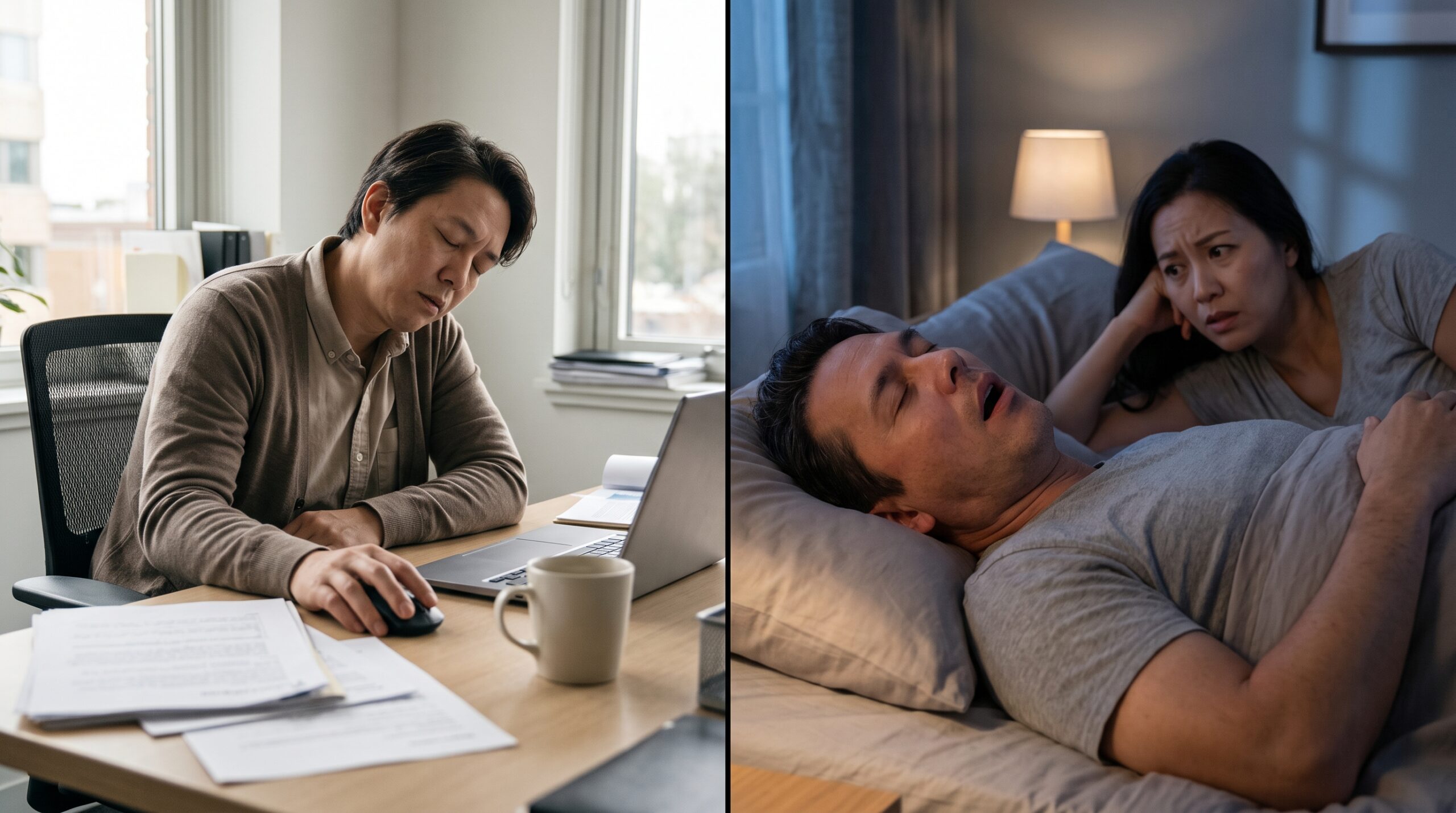
- Constant Unrelenting Fatigue: In untreated sleep apnea, daytime exhaustion feels like a heavy, slogging hangover that lasts from the moment your alarm rings until bedtime.
- Unrefreshing Naps: Why don’t naps help someone with sleep apnea? Because as soon as they fall asleep on the couch for an afternoon nap without a CPAP machine, their airway collapses during the nap, too! Consequently, they wake up from a 45-minute nap with a dry mouth, a racing heart, and severe sleep inertia (feeling even groggier and more disoriented than before they lay down).
Unique Symptoms That Only Happen in One Condition
When evaluating narcolepsy vs. sleep apnea differences, certain hallmark symptoms act as unmistakable clinical signposts.
Symptoms Exclusive to Narcolepsy (REM Intrusion Signs)
Sleep apnea never causes primary REM dissociation symptoms. If you experience the following, narcolepsy must be investigated:
- Cataplexy: Sudden, brief muscle weakness in the face, jaw, neck, or knees triggered by laughter, telling a joke, excitement, or frustration while remaining wide awake. (Unique to Narcolepsy Type 1.)
- Hypnagogic/Hypnopompic Hallucinations: Seeing realistic figures, shapes, or shadows in your bedroom, or hearing voices/footsteps right as you are falling asleep or waking up.
- Recurrent Sleep Paralysis: Waking up conscious in bed but being completely unable to move your limbs or speak for 30 to 120 seconds.
- Automatic Behaviors: Continuing to type, write, drive, or speak on “autopilot” while half-asleep, with zero memory of doing it afterward.
Symptoms Characteristic of Obstructive Sleep Apnea
Conversely, the following nocturnal and morning signs strongly point toward sleep apnea:
- Loud, Disruptive Snoring: Resonant snoring interrupted by sudden silences followed by a loud snort, choke, or gasp.
- Morning Hypoxic Headaches: A dull, pressing headache across both temples upon waking, caused by nighttime carbon dioxide retention and blood vessel dilation.
- Nocturia (Frequent Nighttime Urination): Waking up 2 to 4 times a night to urinate. (When you struggle to breathe against a closed throat, pressure changes in your chest cause your heart to release Atrial Natriuretic Peptide [ANP], which tells your kidneys to produce excess urine all night.)
- Dry Mouth and Nighttime Acid Reflux (GERD): Caused by mouth-breathing and negative chest pressure pulling stomach acid upward.
How Sleep Specialists Diagnose Each Condition
Because you cannot diagnose narcolepsy with a home sleep test, the diagnostic pathway for these two conditions is a critical distinction.
Why a Home Sleep Apnea Test (HSAT) Cannot Diagnose Narcolepsy
Today, many doctors order a convenient Home Sleep Apnea Test (HSAT)—a small device worn on the finger, wrist, and chest at home that measures oxygen levels, heart rate, and breathing effort.
- What HSAT Can Do: It can accurately confirm moderate-to-severe Obstructive Sleep Apnea.
- What HSAT Cannot Do: It does not record brainwaves (EEG) or eye movements (EOG) accurately enough to measure REM latency, and it does not include daytime nap testing. If a narcolepsy patient takes a home sleep test, the test simply comes back “Normal (No Apnea)”—leaving their narcolepsy completely undiagnosed!
The Two-Part Lab Protocol for Narcolepsy (PSG + MSLT)
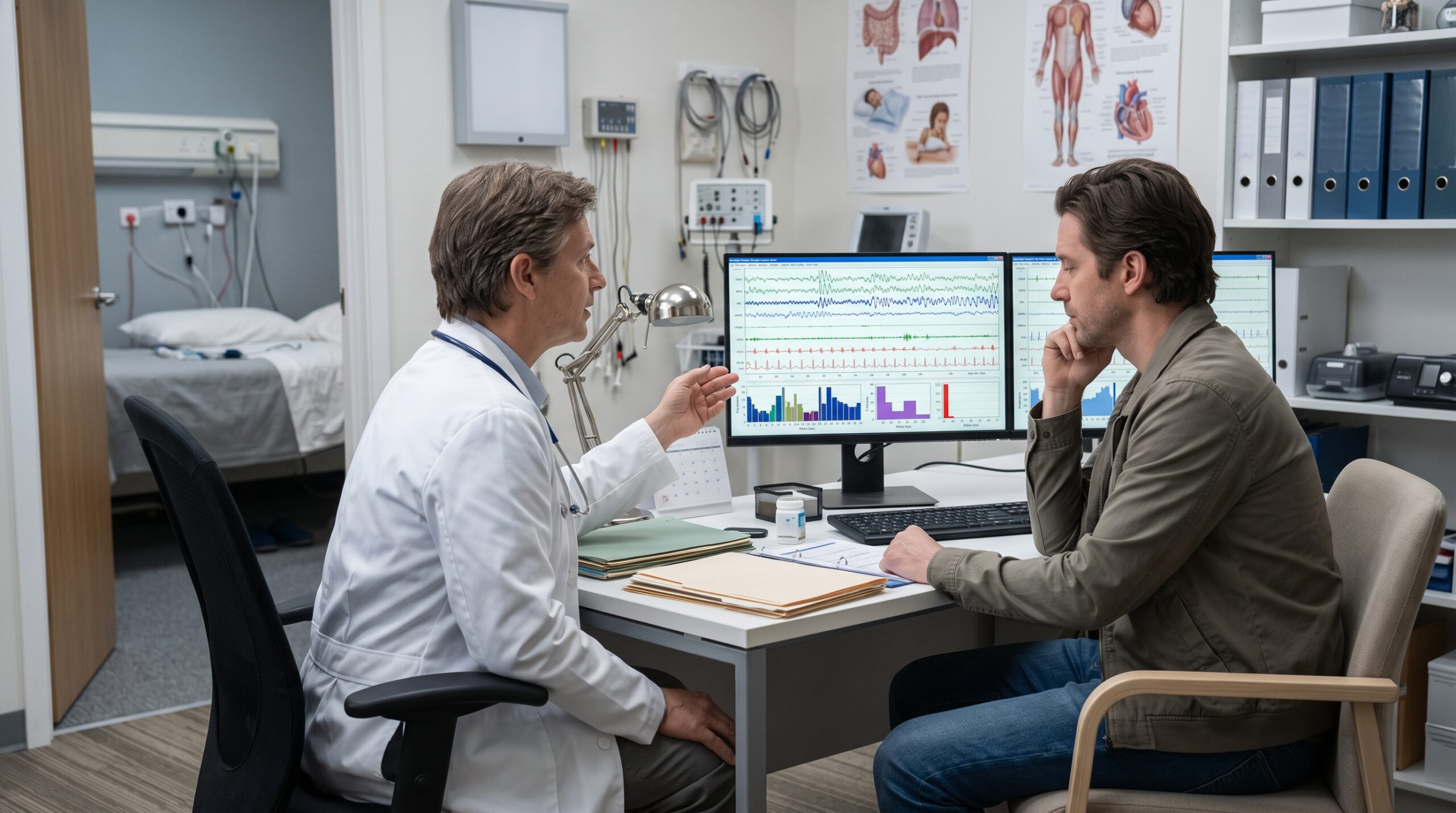
To definitively differentiate narcolepsy from sleep apnea, a patient must undergo an in-lab sleep study:
- Nighttime Polysomnography (PSG): You sleep overnight in a sleep lab wired with EEG brainwave sensors, breathing belts, oxygen sensors, and leg electrodes. This rules out sleep apnea (requiring an AHI < 5) and checks for nighttime Sleep-Onset REM Periods.
- Next-Day Multiple Sleep Latency Test (MSLT): Immediately following the overnight PSG, you stay at the clinic the entire next day for 5 scheduled 20-minute naps spaced two hours apart.
- Narcolepsy Diagnosis: Falling asleep in an average of ≤ 8 minutes (mean sleep latency) AND entering REM sleep (SOREMPs) in at least 2 out of the 5 naps (or 1 daytime SOREMP + 1 nighttime SOREMP on the PSG).
Can You Have Both Narcolepsy AND Sleep Apnea?
Here is a clinical curveball that catches many patients and general practitioners off guard: Having sleep apnea does NOT mean you don’t have narcolepsy.
In fact, medical studies show that 20% to 30% of adults with narcolepsy also have co-occurring Obstructive Sleep Apnea (OSA)!
Why Do Narcolepsy and Sleep Apnea Co-Occur So Often?
Because hypocretin deficiency slows down baseline metabolism and alters brown fat thermogenesis, many people with Narcolepsy Type 1 experience weight gain after symptom onset. Weight gain increases the risk of developing upper airway narrowing and Obstructive Sleep Apnea as they enter their thirties, forties, and fifties.
The Classic Diagnostic Trap (And How to Escape It)
- A patient with undiagnosed narcolepsy and mild-to-moderate sleep apnea goes to a doctor for severe daytime exhaustion.
- The doctor orders an overnight sleep study, sees an Apnea-Hypopnea Index (AHI) of 12 (mild sleep apnea), cancels the next-day MSLT nap test, and prescribes a CPAP machine.
- The patient diligently wears their CPAP machine for 7 to 8 hours every single night. Their snoring stops completely, and their CPAP app shows a perfect AHI of 0.8—yet they are still falling asleep at their desk and having knee-buckling cataplexy when they laugh!
What to Do If You Are Still Exhausted Despite Using CPAP
If you use your CPAP machine faithfully (>4–6 hours per night with a controlled AHI under 5) and still experience crippling daytime sleepiness, vivid dreams during short naps, or cataplexy, ask your sleep specialist for a CPAP-Titrated Overnight PSG followed by an MSLT (wearing your CPAP mask during both the overnight test and all five daytime MSLT naps). This allows doctors to uncover underlying narcolepsy that was previously masked by sleep apnea.
How Treatments Compare
Because the biological mechanisms are completely different, treatments for sleep apnea and narcolepsy target entirely different systems:
Treating Obstructive Sleep Apnea
- CPAP / APAP / BiPAP Therapy: Continuous Positive Airway Pressure delivers a gentle stream of pressurized air through a mask to act as a pneumatic splint, keeping the throat open all night.
- Custom Oral Appliance Therapy: A dentist-fitted mandibular advancement device that shifts the lower jaw slightly forward during sleep.
- Hypoglossal Nerve Stimulation (e.g., Inspire) or Airway Surgery: For patients who cannot tolerate CPAP.
- Adjunctive Wake-Promoting Medication: If residual sleepiness persists despite 100% CPAP compliance ( once narcolepsy is ruled out), medications like Modafinil or Solriamfetol (Sunosi) are FDA-approved for residual OSA sleepiness.
Treating Narcolepsy
- Nighttime Sleep Consolidators (Oxybates): Medications like Xywav (low-sodium oxybate) and Lumryz (once-nightly sodium oxybate) restore deep slow-wave sleep architecture and eliminate cataplexy. (Note: Because oxybates are central nervous system depressants, any co-existing sleep apnea must be carefully evaluated and treated with CPAP before starting oxybate therapy.)
- Targeted Wake-Promoting Agents: Pitolisant (Wakix) (histamine H3 antagonist), Solriamfetol (Sunosi), Modafinil/Armodafinil, and upcoming Orexin-2 Receptor Agonists.
- Scheduled 20-Minute Daytime Naps: A core non-pharmacological prescription for narcolepsy that does not work for untreated sleep apnea.
Conclusion
Understanding the narcolepsy vs. sleep apnea differences empowers you to advocate for the right testing and avoid years of misdiagnosis. While Obstructive Sleep Apnea starves you of restorative sleep by repeatedly blocking your airway at night—leading to loud snoring, morning headaches, and unrefreshing naps—Narcolepsy is a neurological hypocretin disorder that blurs the boundary between waking and dreaming—causing irresistible sleep attacks, refreshing dream-filled power naps, sleep paralysis, and emotionally triggered cataplexy.
Whether you suspect sleep apnea, narcolepsy, or a combination of both, consult a board-certified sleep medicine specialist. By evaluating your complete symptom profile and conducting the proper sleep lab testing, you can finally address the true root cause of your daytime exhaustion.
FAQ
1. Can a CPAP machine treat narcolepsy?
No. A CPAP machine only splints open the physical airway to stop breathing pauses caused by Obstructive Sleep Apnea. Because narcolepsy is caused by a lack of hypocretin neurotransmitters in the brain rather than a blocked airway, a CPAP machine will not reduce narcolepsy sleep attacks or cataplexy (unless you happen to have both conditions simultaneously, in which case CPAP treats the apnea portion while medication treats the narcolepsy).
2. Why did my doctor make me treat my sleep apnea before testing me for narcolepsy?
According to American Academy of Sleep Medicine (AASM) diagnostic criteria, untreated sleep apnea can cause severe sleep deprivation and false-positive rapid REM sleep on a daytime nap test (MSLT). Therefore, if an overnight study finds significant sleep apnea, doctors must first stabilize your breathing with CPAP and then perform the MSLT while you wear your CPAP mask to confirm true narcolepsy.
3. Does sleep apnea ever cause cataplexy or sleep paralysis?
Sleep apnea never causes cataplexy (emotionally triggered muscle weakness while awake). While severe sleep fragmentation from untreated sleep apnea can occasionally trigger isolated episodes of sleep paralysis in predisposed individuals, frequent sleep paralysis combined with vivid hypnagogic hallucinations and refreshing short naps strongly points toward narcolepsy.
4. Which condition is more dangerous if left untreated: narcolepsy or sleep apnea?
Both carry serious risks if left untreated. Both disorders dramatically increase the risk of drowsy driving motor vehicle accidents and workplace injuries. Additionally, untreated moderate-to-severe Obstructive Sleep Apnea places heavy strain on the cardiovascular system over time, significantly increasing the risk of high blood pressure, atrial fibrillation, heart attack, and stroke due to nightly oxygen drops.