
Description
Buy Lumryz Sodium Oxybate Online
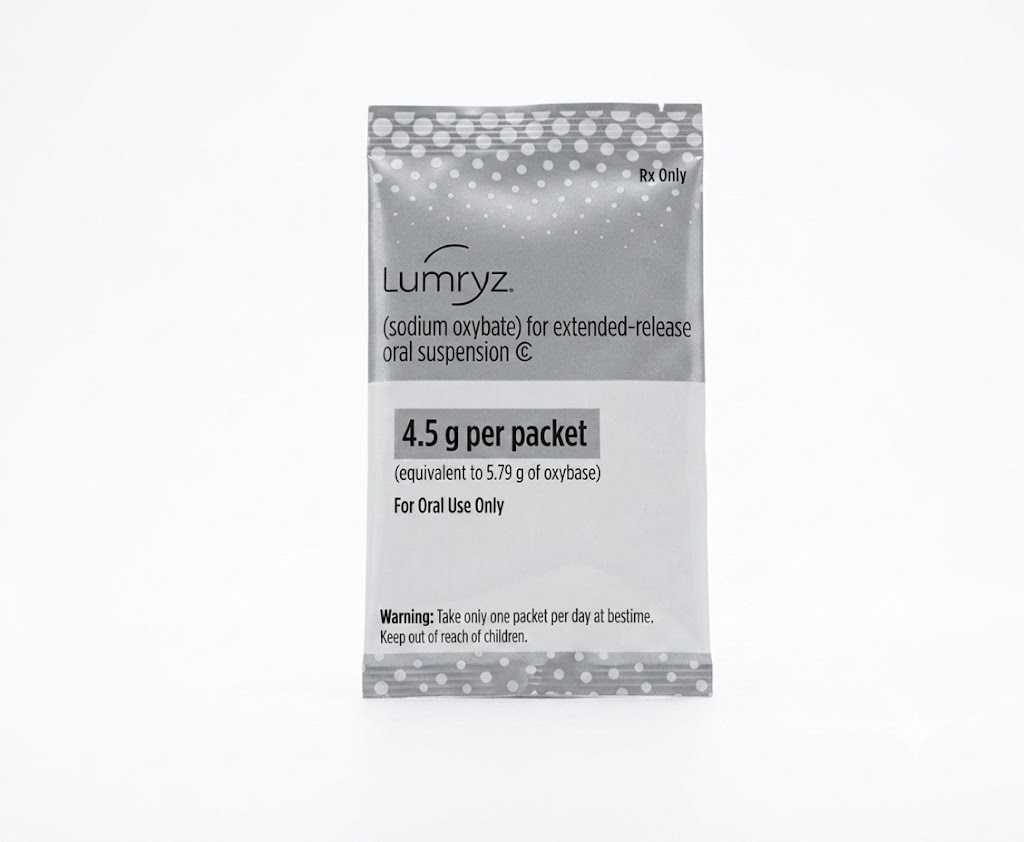
LUMRYZ is the first and only once-nightly extended-release formulation of sodium oxybate approved in the United States for the treatment of cataplexy or excessive daytime sleepiness (EDS) in patients aged 7 years and older with narcolepsy . It is a central nervous system sodium oxybate depressant available only through a restricted Risk Evaluation and Mitigation Strategy (REMS) program due to the risks of CNS depression and abuse or misuse . LUMRYZ is taken as a single oral dose at bedtime and is available in 4.5 g, 6 g, 7.5 g, and 9 g strengths .lumryz sodium oxybate
Key Facts
| Feature | Detail |
|---|---|
| Active Ingredient | Sodium oxybate (sodium salt of gamma-hydroxybutyrate/GHB) |
| Drug Class | Central nervous system (CNS) depressant |
| DEA Schedule | CIII (Schedule III controlled substance) |
| Indication | Treatment of cataplexy or excessive daytime sleepiness (EDS) in patients 7 years+ with narcolepsy |
| Dosage Range (Adults) | 6 g to 9 g once nightly (starting at 4.5 g) |
| Available Strengths | 4.5 g, 6 g, 7.5 g, 9 g packets |
| Dosing Frequency | Once nightly (extended-release) |
| REMS Program | Required; restricted distribution |
| FDA Approval | Initial U.S. Approval for sodium oxybate: 2002 |
What Is LUMRYZ ?
LUMRYZ (sodium oxybate) for extended-release oral suspension is a prescription central nervous system depressant used to treat cataplexy or excessive daytime sleepiness (EDS) in patients aged 7 years and older with narcolepsy .
It is the sodium salt of gamma-hydroxybutyrate (GHB), a substance that acts on the central nervous system to help regulate sleep-wake cycles. LUMRYZ is the first once-nightly sodium oxybate formulation approved in the U.S., distinguishing it from other sodium oxybate products that require a second dose in the middle of the night .
The precise mechanism by which sodium oxybate produces its therapeutic effects is not fully understood. It is thought to work by promoting sodium oxybates slow-wave (delta) sleep and consolidating nighttime sleep, which in turn helps reduce excessive daytime sleepiness and cataplexy episodes .
What this means: LUMRYZ is not a stimulant or a cure for narcolepsy, but rather a medication that helps manage two of its most disruptive symptoms by improving nighttime sleep quality.
Who Is LUMRYZ For?
LUMRYZ is indicated for:
-
Adults with narcolepsy experiencing cataplexy or excessive daytime sleepiness
-
Pediatric patients aged 7 years and older with narcolepsy experiencing cataplexy or EDS
Narcolepsy is a chronic neurological condition characterized by the brain’s inability to properly regulate sleep-wake cycles. Key symptoms include:
-
Excessive daytime sleepiness (EDS)—overwhelming urge to sleep during the day
-
Cataplexy—sudden, brief loss of muscle control triggered by strong emotions
-
Disrupted nighttime sleep
-
Sleep paralysis and hallucinations (in some cases)
LUMRYZ addresses two of these symptoms—EDS and cataplexy—by targeting the underlying sleep disruption.
Who Should NOT Take LUMRYZ?
LUMRYZ is contraindicated (should not be used) in the following cases:
-
In combination with sedative hypnotics or alcohol—the combined CNS depressant effects can be dangerous and potentially fatal
-
Patients with succinic semialdehyde dehydrogenase deficiency—a rare metabolic disorder
Additionally, LUMRYZ is not recommended for:
-
Patients with hepatic impairment—because appropriate dosage adjustments cannot be made
-
Patients with known sensitivity to high sodium intake (e.g., heart failure, hypertension, renal impairment) without careful monitoring—LUMRYZ has high sodium content
What this means: A thorough medical evaluation is essential before LUMRYZ can be prescribed. This is not a medication that can be obtained or used without specialist oversight.
What Makes LUMRYZ Different From Other Sodium Oxybate Products?
The key distinguishing feature of LUMRYZ is its once-nightly extended-release formulation.
Comparison: LUMRYZ vs. Immediate-Release Sodium Oxybate
| Feature | LUMRYZ (Extended-Release) | Immediate-Release Sodium Oxybate |
|---|---|---|
| Dosing frequency | Once nightly | Twice nightly |
| Second dose | Not required | Must awaken 2.5–4 hours after bedtime for second dose |
| Administration burden | Single bedtime dose | Disrupted sleep for second dose |
| Formulation | Extended-release oral suspension | Immediate-release liquid |
| Available strengths | 4.5 g, 6 g, 7.5 g, 9 g packets | Varies |
| REMS program | Yes (LUMRYZ REMS) | Yes (different REMS programs) |
Traditional immediate-release sodium oxybate formulations (such as Xyrem) require patients to take a first dose at bedtime and then awaken 2.5–4 hours later for a second dose . This forced awakening can further disrupt already-fragmented oxybate medication nighttime sleep and increases the risk of dosing errors.
LUMRYZ’s extended-release technology delivers the full therapeutic dose over the course of the night, eliminating the need for a middle-of-the-night dose . In clinical trials, most patients who switched from twice-nightly immediate-release sodium oxybate to once-nightly LUMRYZ preferred the once-nightly formulation .
What this means: For patients who struggle with the twice-nightly dosing regimen, LUMRYZ offers a potentially more convenient option with fewer nighttime disruptions.
How Is LUMRYZ Taken?
LUMRYZ is taken as a single oral dose at bedtime. Proper administration is critical for both safety and effectiveness.
Adult Dosing
-
Starting dose: 4.5 g once per night
-
Titration: Increased by 1.5 g per night at weekly intervals
-
Recommended dosage range: 6 g to 9 g once per night
Pediatric Dosing (Aged 7 Years and Older)
-
Weight ≥ 45 kg (approximately 99 lb): Starting dose 4.5 g, titrated by 1.5 g weekly to maximum 9 g
-
Weight < 45 kg: Cannot be initiated on LUMRYZ; another sodium oxybate product should be used for treatment initiation
Important Administration Instructions
-
Prepare the dose prior to bedtime—do not mix in advance
-
Suspend the dose in approximately ⅓ cup of water (about 80 mL) in the provided mixing cup; may add calorie-free drink mix or flavored water enhancer if desired
-
Shake for 60 seconds—ensure the cap is tightly closed
-
Consume within 30 minutes of mixing
-
Allow at least 2 hours after eating before dosing
-
Take LUMRYZ while in bed and lie down immediately after dosing
-
Remain in bed after taking the dose
LUMRYZ can cause sudden sleep onset without prior drowsiness. Patients will often fall asleep within 5 to 15 minutes of taking the dose, though the time may vary from night to night .
What this means: LUMRYZ requires careful adherence to administration instructions. It is not a “take as needed” medication; it must be taken consistently at bedtime with proper preparation and timing.
What Does Clinical Evidence Show?
LUMRYZ’s efficacy is supported by clinical trial data, including the pivotal Phase 3 REST-ON trial, which evaluated once-nightly sodium oxybate ER in patients aged 16 years and older with narcolepsy .
Key Clinical Trial Findings
In the REST-ON trial (13-week, randomized, double-blind, placebo-controlled):
| Outcome | Finding |
|---|---|
| Daytime sleepiness (MWT) | LUMRYZ significantly increased sleep latency (ability to stay awake) compared to placebo across all doses (6 g, 7.5 g, 9 g) |
| Cataplexy attacks | LUMRYZ significantly reduced weekly cataplexy attacks compared to placebo |
| Daytime sleepiness (ESS) | LUMRYZ significantly improved Epworth Sleepiness Scale scores |
| Disrupted nighttime sleep | LUMRYZ improved objective and subjective measures of sleep quality |
| Clinical Global Impression | Significantly more LUMRYZ recipients were rated “much improved” or “very much improved” |
Evidence from Systematic Review
A systematic review and meta-analysis of sodium oxybate studies found that:
-
Sodium oxybate significantly improved weekly cataplexy attacks compared with placebo (MD = -5.04, 95% CI [-6.35, -3.72], P < 0.00001)
-
Improvement in Maintenance of Wakefulness Test was significant (MD = 4.66, 95% CI: [2.24, 7.07], p = 0.0002)
-
Epworth Sleepiness Scale improvement was significant (MD = -1.93, 95% CI: [-2.73, -1.13], p < 0.00001)
-
The 9 g dose had the most beneficial effect for cataplexy reduction
-
Sodium oxybate was concluded to be an effective pharmacological treatment with an acceptable safety profile
Pediatric Evidence
The safety and effectiveness of LUMRYZ in pediatric patients (7 years and older) is supported by evidence from a double-blind, placebo-controlled, randomized-withdrawal study of immediate-release sodium oxybate . The study demonstrated clinical efficacy in treating cataplexy and EDS in pediatric patients .
What this means: Clinical evidence supports LUMRYZ as an effective treatment for managing key narcolepsy symptoms, with the 9 g dose showing the most significant effects for cataplexy reduction. However, individual responses vary, and titration should be guided by a healthcare provider .
What Are the Most Common Side Effects?
Common Adverse Reactions in Adults
(Incidence ≥ 5% and greater than placebo) :
-
Nausea
-
Dizziness
-
Enuresis (bed-wetting)
-
Headache
-
Vomiting
Common Adverse Reactions in Pediatric Patients
(Reported in studies of immediate-release sodium oxybate; incidence ≥ 5%) :
-
Nausea
-
Enuresis (bed-wetting)
-
Vomiting
-
Headache
-
Weight decreased
-
Decreased appetite
-
Dizziness
-
Sleepwalking
Additional Reactions in Adults (≥ 2%)
Additional adverse reactions occurring in ≥ 2% of LUMRYZ-treated patients and more frequently than placebo :
-
Decreased weight
-
Decreased appetite
-
Somnolence
-
Anxiety
-
Somnambulism (sleepwalking)
-
Confusional state
What Are the Important Safety Considerations?
Boxed Warnings
LUMRYZ carries two FDA boxed warnings (the strongest warning level) :
1. Central Nervous System (CNS) Depression
-
LUMRYZ is a CNS depressant; respiratory depression can occur
-
Clinically significant respiratory depression may occur at recommended doses
-
Patients should avoid hazardous activities requiring mental alertness for at least 6 hours after dosing
2. Abuse and Misuse
-
LUMRYZ is the sodium salt of gamma-hydroxybutyrate (GHB), a Schedule I controlled substance
-
Abuse or misuse of illicit GHB is associated with seizure, respiratory depression, decreased consciousness, coma, and death
Key Warnings and Precautions
| Concern | Details |
|---|---|
| Depression and suicidality | Monitor patients for emergent or increased depression and suicidality |
| Confusion/Anxiety | Monitor for impaired motor/cognitive function |
| Parasomnias | Evaluate episodes of sleepwalking; occurred in 3% of adult patients |
| High sodium content | Monitor patients with heart failure, hypertension, or renal impairment |
| Concurrent CNS depressants | Use caution; may increase risk of respiratory depression, sedation, and death |
| Sleep-disordered breathing | LUMRYZ may impair respiratory drive, especially in patients with compromised respiratory function |
What this means: LUMRYZ is a powerful medication with serious risks that require careful prescribing, monitoring, and patient education. It is not suitable for all patients and must be used under strict medical supervision.
The LUMRYZ REMS Program
LUMRYZ is available only through a restricted distribution program called the LUMRYZ Risk Evaluation and Mitigation Strategy (REMS) .
Purpose of the REMS
The goal of the LUMRYZ REMS is to mitigate the risks of serious adverse outcomes resulting from inappropriate prescribing, misuse, abuse, and diversion of LUMRYZ .
Key REMS Requirements
For Healthcare Providers:
-
Must be certified to prescribe LUMRYZ
-
Must review prescribing information and educational materials
-
Must enroll patients in the REMS program
-
Must counsel patients on serious risks and safe use
-
Must monitor patients for abuse, misuse, and diversion
For Patients:
-
Must enroll in the REMS program
-
Must receive counseling on risks and safe use
-
Must be monitored by prescribers
-
Must inform prescriber about new medications or medical conditions
For Pharmacies:
-
Must be specially certified to dispense LUMRYZ
-
LUMRYZ is dispensed and shipped only to enrolled patients
Further information is available at www.LUMRYZREMS.com or by calling 1-877-453-1029 .
What this means: LUMRYZ is not available through standard retail pharmacies. Patients must enroll in a special program and work with certified healthcare providers and pharmacies to obtain the medication.
Product Variants and Strengths
LUMRYZ is available in single-use packets containing the following strengths :
| Strength | NDC Code |
|---|---|
| 4.5 g packet | 13551-001-07 / 13551-001-30 |
| 6 g packet | 13551-002-07 / 13551-002-30 |
| 7.5 g packet | 13551-003-07 / 13551-003-30 |
| 9 g packet | 13551-004-07 / 13551-004-30 |
Each packet contains the specified amount of sodium oxybate for extended-release oral suspension. The medication is provided as a white to off-white powder .
What this means: The strength prescribed depends on the individual’s titration phase and therapeutic response. The starting dose is always 4.5 g, with weekly increases as directed by the healthcare provider.
What to Verify Before Taking LUMRYZ
Before considering LUMRYZ, patients should verify the following:
Medical Evaluation
-
Have you been formally diagnosed with narcolepsy (Type 1 or Type 2) by a specialist?
-
Have you been evaluated for obstructive sleep apnea or other sleep disorders?
-
Have you discussed your cardiovascular health (especially heart failure, hypertension, renal function) with your provider?
Medication Review
-
Are you taking any other CNS depressants (opioids, benzodiazepines, sedating antidepressants, sleeping medications)?
-
Do you consume alcohol? (Contraindicated with LUMRYZ)
-
Have you discussed potential drug interactions with your provider?
REMS Program
-
Is your healthcare provider certified to prescribe LUMRYZ?
-
Are you prepared to enroll in the LUMRYZ REMS program?
Safety Preparations
-
Do you have a safe, secure place to store LUMRYZ away from children and others?
-
Are you able to take the medication while in bed and remain in bed after dosing?
Common Misconceptions
| Misconception | Clarification |
|---|---|
| LUMRYZ is a sleeping pill | LUMRYZ is a CNS depressant used to manage narcolepsy symptoms by improving sleep architecture, not a general sleep aid |
| LUMRYZ is the same as GHB | LUMRYZ contains sodium oxybate, the pharmaceutical-grade sodium salt of GHB, but is a regulated medication—not the illicit substance |
| Any doctor can prescribe LUMRYZ | Only healthcare providers who are certified through the LUMRYZ REMS program can prescribe it |
| LUMRYZ can be obtained from any pharmacy | LUMRYZ is only dispensed through specially certified pharmacies |
| Once-nightly means less effective | Clinical trials demonstrated efficacy comparable to immediate-release formulations; many patients preferred once-nightly dosing |
What is LUMRYZ used for?
LUMRYZ is used to treat cataplexy or excessive daytime sleepiness (EDS) in patients aged 7 years and older with narcolepsy .
How is LUMRYZ different from Xyrem?
LUMRYZ is an extended-release formulation taken once nightly, whereas Xyrem (immediate-release sodium oxybate) requires a second dose in the middle of the night .
What is the starting dose of LUMRYZ?
The recommended starting dose for adults is 4.5 g once per night .
How quickly does LUMRYZ work?
Patients typically fall asleep within 5 to 15 minutes of taking LUMRYZ, though the time may vary from night to night .
What are the most common side effects?
The most common side effects in adults are nausea, dizziness, enuresis (bed-wetting), headache, and vomiting .
Can I drink alcohol while taking LUMRYZ?
No. LUMRYZ is contraindicated with alcohol due to the risk of severe CNS depression .
Why is LUMRYZ only available through a special program?
LUMRYZ is available only through the LUMRYZ REMS program due to the risks of CNS depression, abuse, and misuse .
Can children take LUMRYZ?
LUMRYZ is approved for patients aged 7 years and older with narcolepsy. Dosing is based on body weight .
What should I do if I miss a dose?
Consult your healthcare provider for guidance. LUMRYZ should be taken at bedtime; missed doses should be handled per provider instructions .
Is LUMRYZ addictive?
LUMRYZ is a Schedule III controlled substance and carries risks of abuse and misuse. It must be used only as prescribed .
Conclusion
LUMRYZ (sodium oxybate) for extended-release oral suspension is the first once-nightly sodium oxybate formulation approved in the U.S. for the treatment of cataplexy or excessive daytime sleepiness in patients aged 7 years and older with narcolepsy. Its extended-release formulation offers a potential advantage over twice-nightly immediate-release products by eliminating the need for a middle-of-the-night dose .
Clinical evidence supports LUMRYZ’s efficacy in reducing cataplexy attacks, improving daytime sleepiness, and enhancing nighttime sleep quality . However, LUMRYZ carries significant risks, including CNS depression and potential for abuse, and is available only through a restricted REMS program .
This product page is intended for educational purposes only and does not constitute medical advice. All decisions regarding LUMRYZ should be made in consultation with a qualified healthcare provider. Always verify information with official manufacturer documentation and prescribing information.
Reviews
There are no reviews yet.