Sleep paralysis can be a frightening experience, especially when it happens alongside vivid hallucinations, intense fear, or a feeling that someone is present in the room. During an episode, a person may become aware of their surroundings but find that they cannot move their body or speak. At the same time, they may see unusual images, hear sounds that seem real, or experience a sensation of pressure on the chest. These experiences can feel extremely convincing, even though they occur during the transition between sleep and wakefulness.
Understanding the signs of severe sleep paralysis and hallucinations can help people recognize what may be happening and determine when professional medical advice is necessary. Sleep paralysis itself is often harmless, but repeated episodes can interfere with sleep, increase anxiety about bedtime, and affect daily well-being. Symptoms that occur outside the usual sleep-wake transition may also require further investigation.
Although many people experience sleep paralysis at least once in their lives, the frequency and intensity can vary considerably. Some episodes last only a few seconds, while others may feel much longer. Hallucinations can make the experience more distressing, particularly when a person does not understand why they are happening.
This article explains the major signs of severe sleep paralysis and hallucinations, their possible causes, how they differ from other sleep-related conditions, and the treatment options that may help reduce recurring episodes.
What Is Sleep Paralysis?
Sleep paralysis is a temporary condition in which a person becomes aware of their surroundings while experiencing an inability to move or speak. It usually occurs when falling asleep or waking up. During these transitions, the brain and body do not always move between sleep and wakefulness at exactly the same time.
During rapid eye movement (REM) sleep, the brain temporarily reduces activity in most voluntary muscles. This natural process, known as REM atonia, helps prevent people from physically acting out their dreams. In sleep paralysis, some of this muscle inactivity continues while the person is becoming conscious.
As a result, the person may feel awake but remain unable to move their arms, legs, or other voluntary muscles. They may also find it difficult to speak despite being aware of what is happening around them. The experience usually resolves spontaneously as the transition between sleep and wakefulness finishes.
Sleep paralysis is not necessarily a sign of a serious medical condition. It can happen occasionally in otherwise healthy people. However, frequent episodes, significant distress, or accompanying symptoms such as excessive daytime sleepiness may indicate that a healthcare professional should assess the situation.
How Sleep Paralysis Affects the Body and Brain
Sleep paralysis involves a temporary mismatch between awareness and the body’s normal sleep-related muscle control. A person may regain awareness before the muscle activity associated with waking has fully returned. This can create a confusing sensation of being trapped between sleep and wakefulness.
Breathing generally continues automatically during an episode because the muscles required for basic breathing remain active. However, the normal breathing pattern and the sensation of chest movement may feel different, which can cause alarm. People may interpret these sensations as an inability to breathe even when air is moving normally.
The experience can become more frightening when the person tries repeatedly to move or call for help. Understanding the biological process behind sleep paralysis can help reduce uncertainty, although it does not necessarily eliminate the fear experienced during an episode.
Why Hallucinations Can Occur During Sleep Paralysis
Hallucinations associated with sleep paralysis occur when dream-like experiences overlap with awareness of the surrounding environment. The brain may continue producing imagery, sounds, or sensations associated with dreaming while the person feels awake.
These experiences can involve visual, auditory, or physical sensations. Some people report seeing unfamiliar figures, hearing indistinct noises, or sensing movement nearby. Others experience unusual sensations involving floating, falling, or the presence of another person.
Sleep-related hallucinations can feel realistic because they occur during an unusual transition between different states of consciousness. Their presence does not automatically mean that someone has a psychiatric disorder. However, hallucinations that occur regularly while fully awake or alongside other concerning symptoms deserve medical evaluation.
What Are the Signs of Severe Sleep Paralysis and Hallucinations?
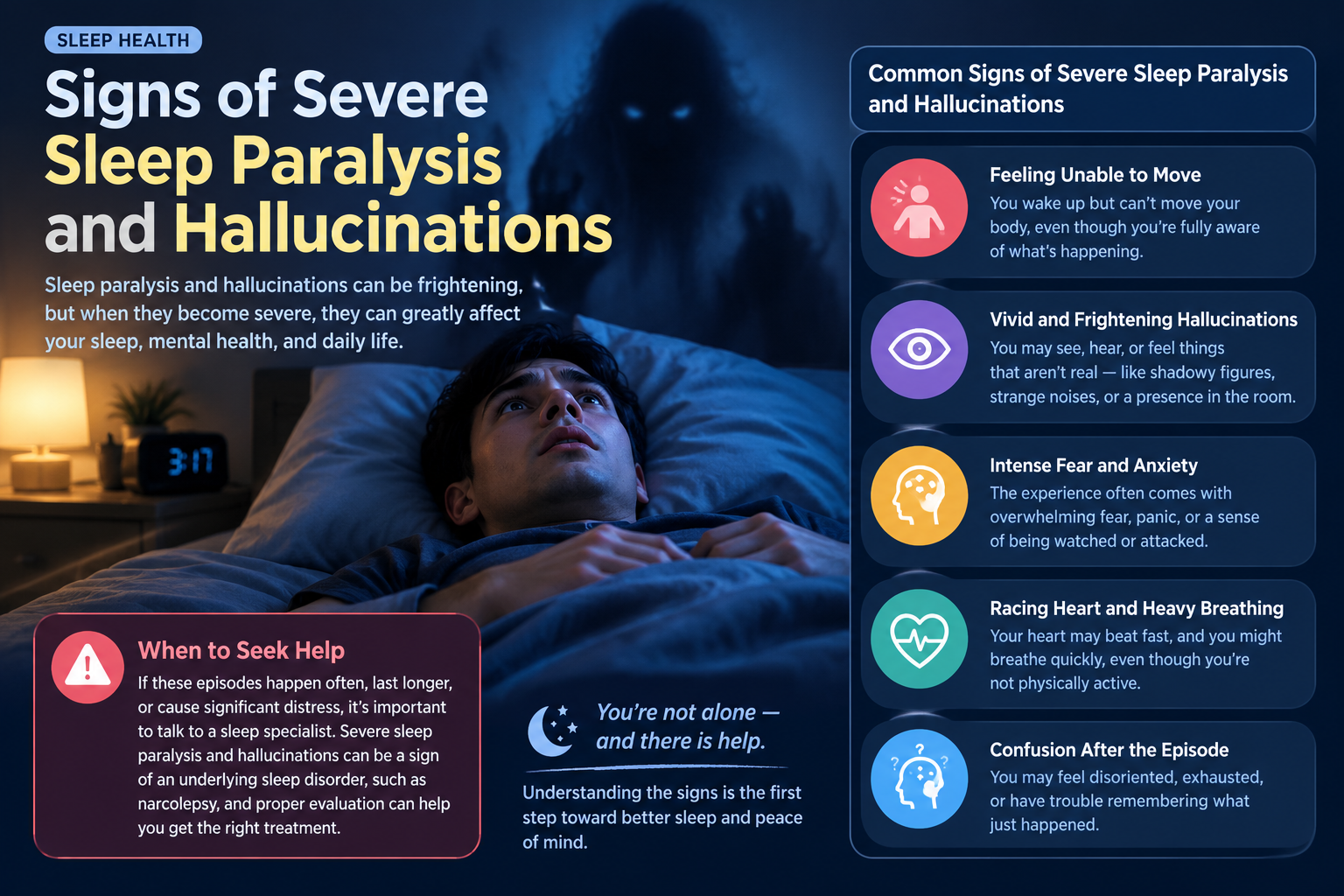
The signs of severe sleep paralysis and hallucinations generally involve more than temporary immobility alone. The episode may include intense sensory experiences, significant fear, repeated disturbances of sleep, or distress that continues after the person wakes completely.
The word severe does not have one universally accepted definition for sleep paralysis. Instead, healthcare professionals consider factors such as frequency, distress, sleep disruption, associated symptoms, and the effect on everyday life.
Inability to Move or Speak
One of the most recognizable symptoms of sleep paralysis is a temporary inability to move the body or produce speech. A person may be conscious of their surroundings but unable to sit up, turn over, raise their hands, or call out.
This symptom occurs because the temporary muscle inhibition associated with REM sleep has not fully ended. Attempts to force movement may feel unsuccessful, increasing the sense of helplessness.
Although the inability to move can be frightening, it typically resolves without intervention. The person gradually regains normal muscle control as the episode ends. Repeated or prolonged weakness outside the sleep-wake transition should not automatically be attributed to sleep paralysis and requires appropriate medical assessment.
Seeing People, Shadows, or Unusual Figures
Visual hallucinations are a common feature of sleep paralysis. A person may perceive shapes, shadows, faces, or figures that appear to occupy the bedroom. The images can seem unusually clear, making it difficult to distinguish the hallucination from the actual environment during the episode.
These perceptions are associated with dream-like activity occurring while the person experiences partial wakefulness. Because the surrounding room may be familiar, the brain can combine real environmental information with internally generated imagery.
Visual hallucinations can increase fear, particularly when the person believes that something threatening is nearby. After the episode ends, the images may disappear quickly. If visual disturbances continue while fully awake, occur during the day, or are accompanied by other neurological symptoms, medical advice is important.
Hearing Voices, Sounds, or Footsteps
Auditory hallucinations can occur alongside sleep paralysis. These may include indistinct voices, buzzing, knocking, footsteps, whispers, or other sounds that seem to come from the surrounding environment.
The sounds may appear to have a clear location, such as near the bedroom door or beside the bed. However, they can arise from sleep-related perceptual activity rather than an actual external source.
Auditory hallucinations during the transition into or out of sleep are not necessarily evidence of a mental health disorder. Their timing is an important consideration. Experiences that repeatedly occur during full wakefulness, interfere with functioning, or cause ongoing distress should be discussed with a healthcare professional.
Feeling a Presence in the Room
Another reported symptom is the strong sensation that someone or something is nearby. This feeling can occur even when the person cannot see anyone or identify a particular sound.
The brain may interpret the combination of immobility, unusual sensory activity, and uncertainty about the surroundings as evidence of another presence. The sensation can feel convincing because the person is partly aware of their real environment.
This experience is sometimes called a sensed-presence hallucination. Although it can be frightening, it can occur as part of sleep paralysis and does not establish that an actual person is present.
Experiencing Chest Pressure or Breathing-Related Sensations
Some people experience pressure on the chest or a sensation that breathing requires more effort during sleep paralysis. These feelings can be especially alarming when combined with the inability to move.
REM sleep changes muscle activity, and the breathing pattern during this stage can feel different from breathing while fully awake. The awareness of these sensations, combined with fear, may make the episode seem more physically threatening.
Nevertheless, not every breathing problem should be attributed to sleep paralysis. Severe or persistent difficulty breathing, chest pain, fainting, or symptoms that continue after full awakening require urgent medical assessment. A person should not assume that potentially serious symptoms are harmless simply because they occur around bedtime.
Intense Fear, Panic, or Confusion
Intense fear is another important sign of a distressing episode. A person may feel unable to protect themselves because they cannot move, while hallucinations make the surrounding environment appear unfamiliar or threatening.
The physical sensations of fear can intensify the experience. A person may become more aware of their heartbeat, breathing, or muscle tension, which can increase panic.
After waking fully, some people feel confused, unsettled, or reluctant to return to sleep. Repeated episodes can create anxiety around bedtime and contribute to an ongoing cycle of poor sleep and increased vulnerability to further episodes.
Types of Hallucinations During Sleep Paralysis
Hallucinations during sleep paralysis can be grouped into several broad categories. These categories are useful for understanding the different sensory experiences that may accompany an episode, although one person can experience more than one type at the same time.
Intruder Hallucinations
Intruder hallucinations involve the perception that another person or presence is nearby. They may include visual images, sounds, or a strong feeling that someone has entered the room.
These experiences can activate the body’s normal fear response. Because the person cannot move freely, the perceived presence may seem especially threatening. The hallucination can feel real while it is happening, even though it arises from sleep-related perceptual activity.
Chest Pressure and Breathing-Related Sensations
This category includes feelings of pressure, heaviness, restricted movement, or unusual breathing sensations. The experiences can occur alongside a sense of helplessness and may contribute to the belief that an external force is affecting the body.
These sensations should be understood in the context of sleep physiology, but medical assessment remains important when symptoms are new, persistent, or inconsistent with a typical brief episode.
Floating, Falling, or Out-of-Body Sensations
Some people experience unusual bodily perceptions during sleep paralysis. They may feel as though they are floating, falling, moving through the room, or observing their body from a different position.
These sensations can occur when the brain’s normal integration of sensory information is altered during the sleep-wake transition. They may be disorienting, but they do not necessarily indicate a dangerous medical condition.
Visual and Auditory Hallucinations
Visual and auditory experiences can occur independently or together. A person may perceive shapes or figures while also hearing sounds that seem connected to what they see.
The intensity of these experiences varies from one episode to another. Their presence alone does not determine whether sleep paralysis is medically severe. Frequency, daytime symptoms, the duration of distress, and the person’s overall health also matter.
What Causes Severe Sleep Paralysis and Hallucinations?
Sleep paralysis usually develops when normal transitions between sleep and wakefulness become disrupted. Several factors can increase the likelihood of experiencing episodes, although an identifiable cause is not always present.
Sleep Deprivation and Irregular Sleep Schedules
Insufficient sleep is an important risk factor for sleep paralysis. Staying awake too late, frequently changing bedtime, or repeatedly waking during the night can disrupt normal sleep patterns.
Irregular schedules may interfere with the stability of REM sleep and the transitions between sleep stages. As a result, some people become more likely to experience episodes of paralysis when falling asleep or waking up.
Maintaining a regular sleep schedule and getting sufficient sleep for one’s age can help reduce this risk. Teenagers generally need around eight to ten hours of sleep per night, while most adults need at least seven hours.
Stress, Anxiety, and Emotional Distress
Stress and anxiety may contribute to disrupted sleep, making sleep paralysis more likely in some people. Worry can interfere with falling asleep, lead to nighttime awakenings, and make it harder to maintain a consistent routine.
The relationship can also work in the opposite direction. A frightening episode may cause anxiety about going to bed, resulting in less sleep and an increased likelihood of further episodes.
Relaxation techniques, regular physical activity, and a consistent bedtime routine may help improve sleep quality. Persistent anxiety or substantial fear of sleeping may benefit from professional support.
Sleeping on Your Back
Some research has associated sleeping in a supine position, meaning lying on the back, with a higher likelihood of sleep paralysis. However, this association does not mean that sleeping on the back always causes an episode.
People who notice a consistent pattern may try sleeping on their side to see whether it helps. Sleep position is only one possible contributing factor, and changing position may not eliminate episodes caused by other issues.
Narcolepsy and Other Sleep Disorders
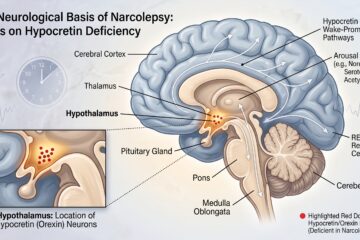
Sleep paralysis can occur alongside narcolepsy, a neurological sleep disorder that affects the regulation of sleep and wakefulness. People with narcolepsy may experience excessive daytime sleepiness, sudden sleep episodes, disrupted nighttime sleep, and sleep-related hallucinations.
Some people with narcolepsy also experience cataplexy, a sudden loss of muscle tone triggered by emotions. Cataplexy is different from sleep paralysis because it typically occurs while a person is awake.
Sleep paralysis may also be associated with other sleep disturbances or irregular sleep patterns. Frequent episodes accompanied by substantial daytime sleepiness warrant evaluation by a healthcare professional or sleep specialist.
Other Factors That May Disrupt Sleep
Certain medications, changes in sleep routines, shift work, and conditions that interfere with normal nighttime rest may contribute to sleep-related disturbances. The relationship varies between individuals, and it is not always possible to identify a single cause.
People should not stop prescribed medication or make major treatment changes without speaking to their healthcare professional. A review of medication, sleep habits, and associated symptoms can help determine whether further investigation is needed.
How Is Severe Sleep Paralysis Different From a Typical Episode?
An isolated episode of sleep paralysis can be frightening without necessarily indicating a serious problem. However, repeated episodes and their effects on sleep and daily functioning deserve attention.
Frequency and Intensity of Episodes
Occasional episodes may happen during periods of sleep deprivation or schedule disruption. More concerning patterns include frequent recurrence, increasing distress, or episodes that consistently interfere with the ability to sleep comfortably.
There is no single episode count that automatically defines sleep paralysis as severe. The overall pattern and its effect on the person’s well-being are more useful than frequency alone.
Hallucinations That Feel Real
Hallucinations may seem highly realistic during sleep paralysis. The person may understand afterward that the experience was connected to sleep, but the fear can remain for some time.
The vividness of a hallucination does not automatically mean the condition is dangerous. Its timing is particularly important because sleep-related hallucinations differ from persistent perceptual disturbances during full wakefulness.
Sleep Disruption and Daytime Tiredness
Repeated episodes may make a person anxious about sleeping. This can lead to delayed bedtimes, insufficient rest, and daytime fatigue.
Excessive daytime sleepiness is particularly important when it persists despite adequate sleep. It can indicate an underlying sleep disorder, medication effect, or another medical issue that deserves evaluation.
When Symptoms May Suggest Another Medical Condition
Symptoms that occur outside the normal transition between sleep and wakefulness may require further investigation. Persistent weakness, prolonged confusion, new neurological symptoms, or hallucinations while fully awake should not automatically be attributed to sleep paralysis.
Sudden weakness on one side of the body, difficulty speaking that continues after waking, or sudden severe neurological symptoms require emergency assessment. Similarly, serious breathing difficulty or chest pain should be treated as potentially urgent rather than assumed to be part of a sleep episode.
Can Sleep Paralysis and Hallucinations Be Dangerous?
Sleep paralysis itself is generally considered harmless, and the temporary inability to move usually resolves without treatment. However, its psychological effects and associated symptoms can be significant for some people.
Effects on Sleep Quality and Emotional Well-Being
Repeated frightening episodes may contribute to bedtime anxiety, difficulty falling asleep, and reduced confidence about sleeping alone. Over time, disrupted sleep can affect concentration, mood, learning, and daily performance.
The hallucinations may be particularly distressing when a person does not understand their connection to sleep. Learning about the condition and discussing recurring symptoms with a healthcare professional can help reduce uncertainty.
Warning Signs That Should Not Be Ignored
Medical attention is appropriate when episodes occur frequently, cause substantial distress, or are accompanied by excessive daytime sleepiness. A healthcare professional should also assess hallucinations that occur regularly outside sleep transitions.
Seek emergency care for sudden neurological symptoms, persistent difficulty breathing, significant chest pain, or other severe symptoms that do not resolve with full awakening. It is important to distinguish typical temporary sleep paralysis from conditions that may require immediate treatment.
How Is Sleep Paralysis Diagnosed?
Sleep paralysis is often identified through a detailed description of the symptoms and when they occur. A healthcare professional may ask about sleep habits, episode frequency, hallucinations, medications, and other medical concerns.
Reviewing Sleep Patterns and Symptoms
Keeping a sleep diary can help identify patterns related to bedtime, wake time, nighttime interruptions, stress, and daytime tiredness. Recording when episodes happen may help establish whether they occur while falling asleep or waking up.
The clinician may also ask about other symptoms, including loud snoring, interrupted breathing during sleep, sudden daytime sleep episodes, and episodes of muscle weakness triggered by emotions.
When a Sleep Specialist May Be Needed
A sleep specialist may be appropriate when episodes recur frequently, cause significant distress, or occur alongside persistent daytime sleepiness. The specialist can assess whether symptoms are consistent with isolated sleep paralysis or suggest another sleep disorder.
The evaluation may include a review of medical history, medications, sleep habits, and other relevant symptoms. The appropriate next steps depend on the individual’s circumstances.
Sleep Studies and Testing for Narcolepsy
Not everyone who experiences sleep paralysis needs a sleep study. When narcolepsy or another sleep disorder is suspected, a clinician may recommend overnight polysomnography, which records aspects of sleep, breathing, and other physiological activity.
In some cases, a multiple sleep latency test (MSLT) may follow the overnight study. This test assesses how quickly a person falls asleep during scheduled daytime nap opportunities and whether REM sleep occurs unusually early.
Testing is selected according to the symptoms and clinical assessment. Sleep paralysis alone does not establish a diagnosis of narcolepsy.
How to Reduce Sleep Paralysis and Hallucinations
The most useful approach often involves improving sleep consistency, addressing factors that interfere with rest, and seeking treatment for any underlying sleep disorder.
Maintain a Consistent Sleep Schedule
Going to bed and waking up at approximately the same times each day can support a more stable sleep-wake rhythm. A regular schedule is helpful even on weekends, when large changes in sleeping hours may disrupt the routine.
A predictable schedule can also make it easier to obtain sufficient sleep and recognize patterns that may contribute to recurring episodes.
Get Enough Sleep Every Night
Adequate sleep is an important part of reducing the risk of sleep paralysis. Teenagers generally need eight to ten hours each night, while most adults need at least seven hours.
People who regularly feel tired during the day may need to review their sleep duration and quality. Persistent tiredness despite adequate sleep should be discussed with a healthcare professional.
Manage Stress and Relax Before Bed
A calming bedtime routine may help people who struggle with stress-related sleep disruption. Quiet activities, gentle breathing exercises, and reducing stimulating activities before bedtime can support relaxation.
People who experience substantial anxiety after episodes may benefit from speaking with a mental health professional. The goal is to reduce distress and improve sleep without assuming that anxiety is the sole cause of the condition.
Create a Comfortable Sleep Environment
A comfortable bedroom can support more consistent sleep. Keeping the room quiet, reducing unnecessary light, and maintaining a comfortable temperature may make it easier to rest.
Limiting caffeine later in the day and reducing activities that delay bedtime can also help. People who notice an association between sleeping on their back and episodes may consider trying a different position.
Seek Treatment for Underlying Sleep Disorders
When sleep paralysis is associated with narcolepsy or another medical condition, addressing the underlying problem may help reduce symptoms. Treatment depends on the diagnosis and may involve changes to sleep routines, medication, or other specialist-recommended interventions.
Medication is not routinely necessary for isolated sleep paralysis. Any treatment should be guided by a qualified healthcare professional rather than started independently.
What to Do During a Sleep Paralysis Episode
Although an episode can feel frightening, knowing what is happening may help reduce panic. The experience is generally temporary, and normal movement usually returns as the sleep-wake transition finishes.
Remind Yourself That the Episode Is Temporary
If you recognize the experience as sleep paralysis, remind yourself that temporary immobility can occur during the transition between sleep and wakefulness. This understanding may help reduce fear, even if the hallucinations still feel convincing.
Avoid assuming that every unusual sensation indicates an immediate threat. If the symptoms do not fit a typical brief episode or continue after full awakening, seek appropriate medical advice.
Focus on Calm, Steady Breathing
Paying attention to comfortable, natural breathing may help reduce panic during an episode. Trying to force large breaths or struggling intensely against the temporary immobility may increase distress.
The aim is not to control every sensation but to remain as calm as possible while normal movement returns. Persistent or severe breathing difficulty after waking requires urgent assessment.
Try Gentle Movements When Possible
Some people find it helpful to focus on small, gentle movements as the episode resolves. However, there is no guarantee that a particular movement will end sleep paralysis more quickly.
The episode usually ends spontaneously. Afterward, taking a moment to become fully alert before returning to sleep may help the person feel more comfortable.
Develop a Relaxing Routine After an Episode
A frightening episode may leave a person feeling unsettled. A brief period of quiet relaxation, a comfortable sleeping environment, and a consistent sleep routine may make it easier to return to rest.
If episodes become frequent or cause fear of bedtime, professional advice can help identify contributing factors and suitable treatment options.
Frequently Asked Questions
Can Sleep Paralysis Cause Realistic Hallucinations?
Yes. Sleep paralysis can involve vivid visual, auditory, and physical hallucinations. These occur when dream-like experiences overlap with awareness of the surroundings during the transition between sleep and wakefulness. Although they may feel real at the time, they do not necessarily indicate a psychiatric disorder.
How Do You Know If Sleep Paralysis Is Severe?
Sleep paralysis may be particularly concerning when it occurs frequently, causes substantial distress, disrupts sleep, or is accompanied by excessive daytime sleepiness. There is no single universal definition of severity, so the overall symptom pattern and its effect on daily life are important.
Can Sleep Paralysis Happen Every Night?
Sleep paralysis can recur, but frequent episodes should not be ignored. Repeated disturbances may be associated with insufficient sleep, irregular schedules, stress, or an underlying sleep disorder. A healthcare professional can help determine whether further assessment is necessary.
Are Sleep Paralysis Hallucinations a Sign of Mental Illness?
Not necessarily. Hallucinations that occur specifically while falling asleep or waking up can be part of normal sleep-related processes. However, hallucinations that occur while fully awake, persist, or interfere with daily functioning should be evaluated by a healthcare professional.
Can Narcolepsy Cause Severe Sleep Paralysis?
Yes. Sleep paralysis can occur in people with narcolepsy, although it can also occur without narcolepsy. Persistent excessive daytime sleepiness, sudden sleep episodes, or emotion-triggered muscle weakness are important symptoms to discuss with a sleep specialist.
When Should You See a Doctor for Sleep Paralysis?
Consider seeking medical advice if episodes are frequent, cause significant anxiety, interfere with sleep, or occur alongside excessive daytime sleepiness. Seek urgent medical attention for persistent breathing difficulty, chest pain, sudden neurological symptoms, or other severe symptoms that continue after full awakening.
Conclusion
Recognizing the signs of severe sleep paralysis and hallucinations can help people understand these frightening experiences and decide when to seek medical support. Temporary inability to move or speak, vivid visual or auditory perceptions, a sensed presence, chest pressure, and intense fear can all occur during sleep paralysis. These symptoms are often related to the overlap between REM sleep and wakefulness rather than an external threat.
Occasional episodes are generally harmless, but frequent or highly distressing experiences can affect sleep quality and emotional well-being. Maintaining a consistent sleep schedule, getting enough rest, managing stress, and creating a comfortable sleeping environment may help reduce the likelihood of further episodes.
It is equally important to recognize symptoms that may point to another condition. Persistent hallucinations while fully awake, significant daytime sleepiness, ongoing weakness, or severe breathing difficulties require appropriate medical assessment. A healthcare professional can review the symptoms, identify possible contributing factors, and recommend further testing or treatment when necessary.
Understanding sleep paralysis is an important first step toward reducing fear and improving sleep. With appropriate sleep habits and medical guidance when needed, many people can manage recurring episodes and protect their overall well-being.