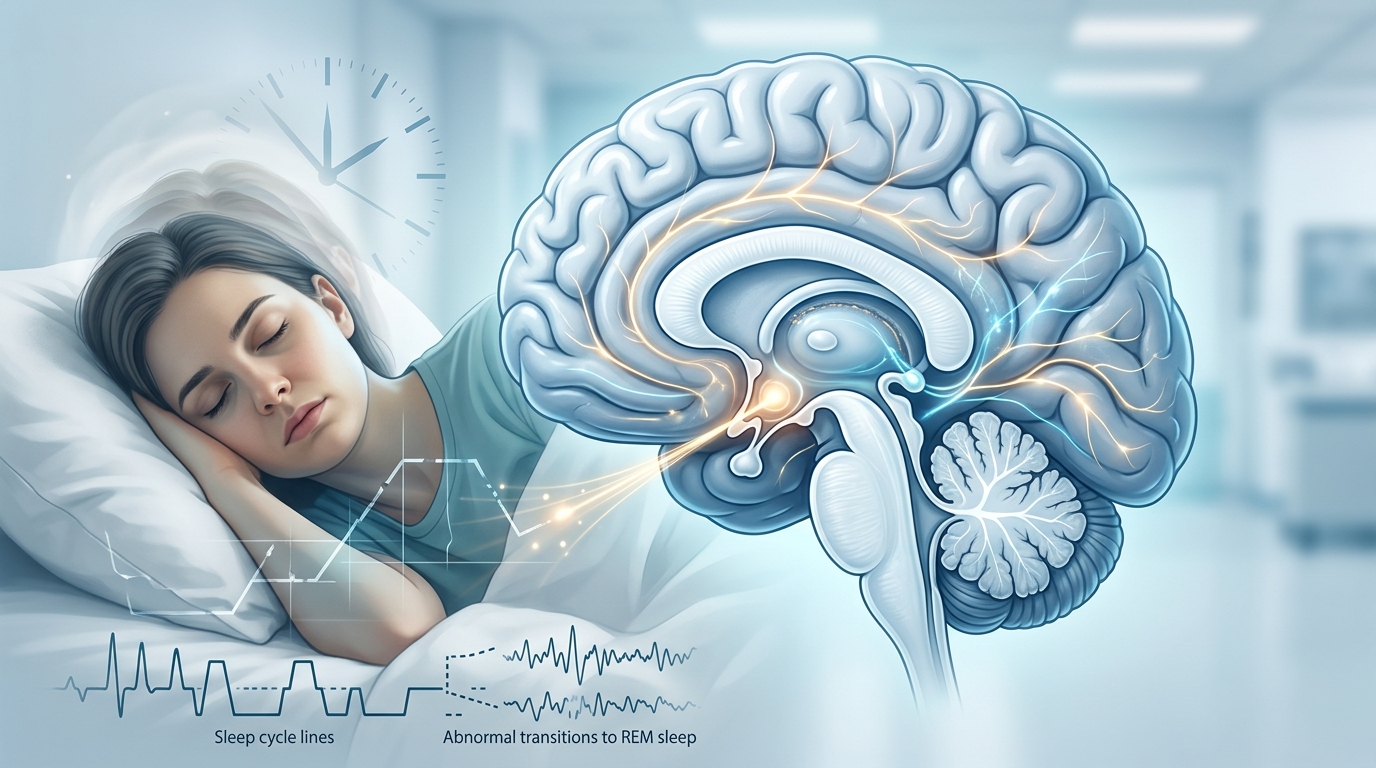
Narcolepsy is a neurological sleep disorder that can make it unusually difficult for a person to stay awake and alert during the day. People with narcolepsy may experience overwhelming daytime sleepiness even when they have had enough opportunity to sleep at night. Some people may also experience sudden muscle weakness, disrupted nighttime sleep, vivid dream-like experiences around sleep, and temporary inability to move when falling asleep or waking up. Because these symptoms can overlap with other sleep problems, understanding what causes narcolepsy is an important part of recognizing the condition and seeking appropriate medical care.
If you have searched for what is the cause of narcolepsy, you may be looking for one specific explanation. However, narcolepsy does not appear to have one simple cause in every person. Researchers have identified several biological, genetic, immune-related, and environmental factors that may contribute to its development. The strongest evidence points to a brain chemical called hypocretin, also known as orexin, which plays an important role in maintaining wakefulness and regulating the sleep-wake cycle.
Narcolepsy is generally divided into two main types: narcolepsy type 1 and narcolepsy type 2. Narcolepsy type 1 is strongly associated with a significant reduction or absence of hypocretin in the brain and is commonly associated with cataplexy, which is a sudden loss of muscle strength triggered by emotions. Narcolepsy type 2 usually does not involve the same clearly established loss of hypocretin, and its underlying cause remains less completely understood. This difference is important because it shows that narcolepsy may involve more than one biological pathway.
What Is Narcolepsy?
Narcolepsy is a chronic neurological disorder that affects the brain’s ability to regulate normal sleep and wakefulness. A healthy sleep-wake system allows a person to remain awake during the day, become sleepy at an appropriate time, enter sleep gradually, and move through different stages of sleep in an organized pattern. Narcolepsy can interfere with this regulation and cause sleep-related symptoms during waking hours.
One of the most important symptoms is excessive daytime sleepiness. This is more than ordinary tiredness after a busy day or a night of insufficient sleep. A person with narcolepsy may feel an overwhelming need to sleep during the day and may struggle to maintain alertness even while performing routine activities. Severity varies between individuals, and symptoms can affect education, employment, social activities, and daily responsibilities.
Some people with narcolepsy also experience cataplexy. Cataplexy involves a sudden temporary reduction in muscle strength while the person remains conscious. It can affect different muscle groups and may be associated with strong emotions. Cataplexy is particularly associated with narcolepsy type 1 and provides an important clinical clue when doctors evaluate a person’s symptoms.
Other symptoms may include sleep paralysis, vivid hallucination-like experiences when falling asleep or waking, and fragmented nighttime sleep. These symptoms occur because the normal boundaries between wakefulness and sleep can become less stable. Understanding these symptoms can help explain why narcolepsy is considered a disorder of sleep-wake regulation rather than simply a problem of not getting enough sleep.
What Is the Main Cause of Narcolepsy?
When considering what is the cause of narcolepsy, one of the most important factors researchers study is hypocretin, also known as orexin. Hypocretin is a neurochemical produced by a small group of specialized neurons in a region of the brain called the hypothalamus. It helps promote wakefulness, regulate alertness, and stabilize the transition between sleep and wake states.
In many people with narcolepsy type 1, hypocretin levels are extremely low or nearly absent. This loss is associated with damage or destruction of the neurons that normally produce hypocretin. Without sufficient hypocretin signaling, the brain may have difficulty maintaining stable wakefulness and properly coordinating different states of consciousness.
The loss of hypocretin-producing neurons is therefore considered a major biological feature of narcolepsy type 1. However, identifying low hypocretin levels does not completely answer the question of why those neurons disappear in the first place. Researchers believe that several factors may interact, including genetic susceptibility and immune system activity.
This distinction is important. Hypocretin deficiency helps explain what happens in the brain, but researchers are still investigating the chain of events that leads to the loss of hypocretin-producing neurons. Therefore, the cause of narcolepsy involves both the biological changes associated with the condition and the factors that may contribute to those changes.
The Role of Hypocretin in Wakefulness
Hypocretin is important because the brain needs stable systems to maintain alertness. During normal waking hours, multiple neural pathways work together to keep a person conscious and responsive. Hypocretin helps coordinate these systems and supports a stable waking state.
When hypocretin signaling is significantly reduced, transitions between wakefulness and sleep may become less stable. This can contribute to excessive daytime sleepiness and other characteristic symptoms. The relationship between hypocretin and narcolepsy has been one of the most important discoveries in sleep medicine because it has helped researchers understand the neurological basis of the disorder.
Hypocretin also interacts with other systems involved in attention, arousal, motivation, and energy regulation. Because of these connections, changes in hypocretin signaling can affect more than simply whether a person feels sleepy. The broader sleep-wake regulation system may become disrupted, contributing to the complex collection of symptoms associated with narcolepsy.
It is important to remember that not every person with narcolepsy has the same hypocretin pattern. The association between low hypocretin and narcolepsy is especially strong in narcolepsy type 1. Narcolepsy type 2 is less clearly linked to hypocretin deficiency, which is one reason researchers continue to investigate its underlying mechanisms.
Could an Autoimmune Process Cause Narcolepsy?
One major theory about the development of narcolepsy type 1 involves the immune system. The immune system normally protects the body from infections and other harmful threats. In autoimmune conditions, immune activity can mistakenly target the body’s own cells or tissues.
Researchers have proposed that an abnormal immune response may contribute to the destruction of hypocretin-producing neurons in susceptible individuals. This theory is supported by genetic associations, biological findings, and research examining immune responses in people with narcolepsy.
However, the autoimmune explanation should be understood carefully. Researchers have not established a single autoimmune mechanism that explains every case of narcolepsy. The disease process may involve multiple interacting factors, and the exact sequence of events remains an active area of scientific research.
The immune system may be particularly important when combined with genetic susceptibility. A person may have genetic characteristics that increase susceptibility, while an environmental event could potentially contribute to an abnormal immune response. This possibility helps explain why researchers do not generally describe narcolepsy as a simple inherited disease.
Can Genetics Cause Narcolepsy?
Genetic factors appear to influence the risk of developing narcolepsy. Researchers have identified strong associations between narcolepsy and certain genetic variants involved in immune system regulation. One genetic marker, HLA-DQB1*06:02, has been particularly associated with narcolepsy, especially narcolepsy accompanied by cataplexy.
Having this genetic marker does not mean that a person will definitely develop narcolepsy. Genetic susceptibility is different from genetic certainty. Many people who carry associated genetic variants never develop the disorder, which indicates that other factors are likely involved.
Family history may also influence risk. Narcolepsy can occur in families, but most people with narcolepsy do not have a close family member with the same disorder. This pattern suggests that narcolepsy is not usually inherited through a simple single-gene pathway.
The relationship between genetics and narcolepsy is therefore complex. Genes may influence how the immune system responds or how vulnerable certain neurological systems are, while additional biological or environmental factors may contribute to whether the disorder eventually develops.
Environmental Factors and Narcolepsy
Researchers have investigated whether environmental factors can contribute to the development of narcolepsy. These factors may include infections, immune stimulation, and other events that could affect the immune or nervous systems.
The environmental theory does not mean that one particular environmental exposure directly causes narcolepsy in every person. Instead, researchers are studying whether certain events can act as triggers in people who already have an underlying susceptibility.
The idea of a trigger is different from the idea of a root cause. A trigger may contribute to the timing or development of a disease without being sufficient to cause it on its own. This distinction is particularly important when discussing narcolepsy because genetic, neurological, and immune factors may interact.
Research into environmental influences continues because understanding these relationships could help clarify why hypocretin-producing neurons are lost in some people but not others. More research is needed before many proposed environmental factors can be considered established causes.
Can an Infection Cause Narcolepsy?
Infections have been investigated as possible environmental factors associated with narcolepsy. Researchers have examined whether certain infections or immune responses following infection could influence the development of narcolepsy in genetically susceptible individuals.
The proposed connection is biologically interesting because infections activate the immune system. If an abnormal immune response were involved in the destruction of hypocretin-producing neurons, an immune-stimulating event could potentially play a role in the disease process.
However, an infection should not automatically be considered the direct cause of narcolepsy. The relationship between infection, immunity, genetics, and neurological changes is complicated. Evidence regarding individual infections can vary, and research findings do not establish that every case of narcolepsy results from an infection.
This is why scientists continue to investigate possible infectious and environmental triggers rather than identifying a single infection as the universal cause of the disorder.
Can Stress Cause Narcolepsy?
Stress is often discussed when people experience changes in sleep or daytime alertness. Severe or prolonged stress can affect sleep quality, emotional well-being, concentration, and energy levels. It can also make existing sleep problems feel more noticeable.
However, stress itself is not considered an established primary cause of narcolepsy. Narcolepsy involves neurological changes in the systems responsible for sleep and wakefulness, and these changes cannot be explained simply by ordinary psychological stress.
Stress may influence how symptoms are experienced or may make daytime sleepiness more difficult to manage. It can also disrupt nighttime sleep, potentially making a person feel even more tired. These effects should not be confused with the underlying biological mechanisms of narcolepsy.
If someone experiences persistent excessive daytime sleepiness, it is important not to assume that stress is the explanation without considering other possible causes. A healthcare professional can evaluate the symptoms and determine whether further sleep assessment is appropriate.
Can Lack of Sleep Cause Narcolepsy?
Insufficient sleep can cause significant daytime sleepiness, difficulty concentrating, reduced alertness, and mood changes. However, ordinary sleep deprivation does not cause narcolepsy.
Narcolepsy is a neurological disorder involving abnormal regulation of sleep and wakefulness. A person who is simply not sleeping enough may feel exhausted, but this is different from the persistent and often overwhelming sleepiness associated with narcolepsy.
The distinction can sometimes be difficult because both conditions involve daytime tiredness. The difference becomes particularly important when excessive sleepiness continues despite adequate opportunities for nighttime sleep or when other narcolepsy-related symptoms are present.
A person who regularly struggles to remain awake during the day should consider discussing the symptoms with a healthcare professional rather than assuming that lack of sleep is the only explanation.
Narcolepsy Type 1 and Its Causes
Narcolepsy type 1 is strongly associated with cataplexy and low levels of hypocretin. The loss of hypocretin-producing neurons is considered a central feature of this form of narcolepsy.
The combination of genetic susceptibility and an abnormal immune response is one of the leading explanations for why these neurons may be lost. Researchers continue to investigate how these factors interact and what additional environmental influences may be involved.
Narcolepsy type 1 can occur during childhood, adolescence, or adulthood. The symptoms may develop gradually or become noticeable over time. Because excessive daytime sleepiness can have many possible causes, diagnosis may require specialized sleep testing.
Understanding narcolepsy type 1 is particularly useful when discussing what is the cause of narcolepsy, because it provides the clearest connection between a specific neurological abnormality and the symptoms of the disorder.
Narcolepsy Type 2 and Its Causes
Narcolepsy type 2 is characterized by excessive daytime sleepiness without the typical cataplexy associated with narcolepsy type 1. Hypocretin levels are generally not known to be severely reduced in the same way.
Because the biological mechanism of narcolepsy type 2 is less clearly understood, researchers continue to study why it develops. Some cases may involve biological pathways that overlap with narcolepsy type 1, while other cases may have different underlying mechanisms.
The distinction between the two types can also change over time. Some people initially diagnosed with narcolepsy type 2 may later develop symptoms that lead to a different classification. This is one reason careful medical evaluation and ongoing assessment can be important.
Narcolepsy type 2 demonstrates that excessive daytime sleepiness can arise from complex neurological mechanisms even when severe hypocretin deficiency is not identified.
Is Narcolepsy Hereditary?
Narcolepsy is not usually considered a straightforward hereditary disorder. Although genetic factors influence susceptibility, the majority of people with narcolepsy do not have a close relative with the condition.
Genes associated with immune regulation appear to play an important role in susceptibility. However, genetics alone do not explain why one person develops narcolepsy while another person with similar genetic characteristics does not.
Researchers therefore consider narcolepsy a complex disorder influenced by multiple factors. Genetic predisposition may create vulnerability, while immune activity, environmental factors, and other biological processes may contribute to disease development.
This understanding is important for families because having a relative with narcolepsy does not mean that every family member will develop it.
Does Brain Damage Cause Narcolepsy?
Narcolepsy is associated with dysfunction in brain systems that regulate sleep and wakefulness. In narcolepsy type 1, the loss of hypocretin-producing neurons in the hypothalamus is particularly important.
This does not mean that ordinary physical injury to the brain is the usual cause of narcolepsy. Brain injuries and certain neurological conditions can sometimes produce sleepiness or other sleep-related problems, but these situations are different from the typical biological process associated with narcolepsy.
The hypothalamus contains important systems involved in sleep-wake regulation, appetite, hormones, and other physiological processes. The involvement of hypocretin-producing neurons illustrates how a relatively small group of specialized cells can have a major influence on wakefulness.
What Are the Risk Factors for Narcolepsy?
Risk factors are characteristics or circumstances associated with an increased likelihood of developing a condition. They are not necessarily direct causes. For narcolepsy, researchers have identified genetic susceptibility as an important factor.
A family history may also increase risk, although familial cases are relatively uncommon. Certain immune-related genetic characteristics are particularly associated with narcolepsy type 1.
Researchers have also investigated environmental and immune-related factors. However, many proposed risk factors remain under study, and not every association has been proven to represent a direct causal relationship.
Understanding this distinction helps prevent misinformation. A factor can be associated with narcolepsy without being sufficient to cause it by itself.
Symptoms That May Suggest Narcolepsy
Excessive daytime sleepiness is one of the most important symptoms. A person may feel an overwhelming need to sleep during the day or may have difficulty maintaining alertness despite getting an adequate amount of nighttime sleep.
Cataplexy is another important symptom, particularly for narcolepsy type 1. It involves sudden muscle weakness while consciousness is maintained. The episodes can vary in severity and duration.
Sleep paralysis can also occur. During an episode, a person may temporarily be unable to move while falling asleep or waking up. Although sleep paralysis can occur in people without narcolepsy, frequent episodes combined with other symptoms may be clinically relevant.
Some people experience vivid dream-like perceptions around the transition between wakefulness and sleep. Nighttime sleep may also be fragmented, meaning that a person can sleep for an apparently adequate amount of time but still experience poor-quality sleep.
Because these symptoms can occur in other sleep and neurological conditions, they should not be used alone to diagnose narcolepsy.
How Is Narcolepsy Diagnosed?
Diagnosing narcolepsy usually begins with a detailed medical and sleep history. A healthcare professional may ask about daytime sleepiness, nighttime sleep, unusual muscle weakness, sleep paralysis, dream-like experiences, medications, other medical conditions, and daily sleep patterns.
A sleep diary may be useful for understanding a person’s sleep schedule and identifying patterns. In some situations, wearable devices or other forms of sleep monitoring may also contribute information.
An overnight sleep study, known as polysomnography, may be used to evaluate nighttime sleep and rule out other conditions. A Multiple Sleep Latency Test may then be performed to measure how quickly a person falls asleep during scheduled daytime opportunities to sleep and whether certain sleep stages appear unusually early.
In selected situations, hypocretin levels in cerebrospinal fluid may be assessed. This type of testing is not necessary for every patient, but it can provide important information in appropriate clinical circumstances.
Accurate diagnosis matters because excessive daytime sleepiness has many possible causes. Sleep apnea, insufficient sleep, medication effects, depression, other neurological disorders, and several additional conditions can produce similar symptoms.
Why Understanding the Cause Matters
Understanding what is the cause of narcolepsy can help people recognize that the condition is not simply a matter of being lazy, unmotivated, or unwilling to stay awake. Narcolepsy involves neurological regulation of sleep and wakefulness and can have a substantial effect on everyday life.
Knowing the biological basis can also encourage people to seek appropriate medical evaluation. Persistent daytime sleepiness should not automatically be dismissed as a normal consequence of a busy lifestyle.
Research into the causes of narcolepsy may also lead to improved diagnostic methods and treatments. Understanding hypocretin biology has already influenced the development of therapies designed to address symptoms and improve wakefulness.
Although researchers have learned a great deal about narcolepsy, important questions remain unanswered. Continued research into immune mechanisms, genetics, environmental influences, and brain chemistry may provide a more complete explanation of how the condition develops.
Narcolepsy is a complex neurological sleep disorder that affects the brain’s ability to regulate sleep and wakefulness. According to the National Heart, Lung, and Blood Institute (NHLBI), narcolepsy can cause extreme daytime sleepiness, disrupted nighttime sleep, sleep paralysis, and other sleep-related symptoms. The organization also explains the differences between narcolepsy type 1 and type 2 and discusses important risk factors associated with the condition. Readers who want reliable medical information can learn more about narcolepsy from the NHLBI.
When Should You Talk to a Healthcare Professional?
Persistent excessive daytime sleepiness deserves medical attention when it interferes with everyday activities. This is especially important when sleepiness occurs despite adequate opportunities for nighttime sleep.
Sudden episodes of muscle weakness should also be discussed with a healthcare professional. The presence of cataplexy can be particularly relevant when evaluating possible narcolepsy type 1.
People who experience frequent sleep paralysis, unusual dream-like experiences around sleep, or severely disrupted nighttime sleep may also benefit from professional evaluation, particularly when these symptoms occur alongside significant daytime sleepiness.
Medical evaluation is especially important when daytime sleepiness affects safety. Falling asleep while driving, operating machinery, or performing other activities that require continuous attention can create serious risks.
A healthcare professional can determine whether symptoms suggest narcolepsy or another sleep disorder and can recommend appropriate testing when necessary.
Can Narcolepsy Be Prevented?
There is currently no reliable method that can guarantee prevention of narcolepsy. This is partly because researchers have not identified one universal cause that can be removed or avoided.
Genetic susceptibility cannot simply be eliminated, and the biological mechanisms involving immune responses and hypocretin-producing neurons remain incompletely understood.
Researchers continue to study environmental triggers and immune mechanisms because a better understanding of these processes could eventually contribute to prevention strategies. However, prevention should not be based on unsupported claims about avoiding particular foods, stress, activities, or ordinary lifestyle factors.
For people who already have symptoms, the practical focus is usually early recognition, professional diagnosis, symptom management, and maintaining a consistent sleep routine as recommended by a healthcare professional.
Final Thoughts
So, what is the cause of narcolepsy? The answer is more complex than a single cause. Narcolepsy is a neurological sleep disorder involving abnormal regulation of the sleep-wake cycle. In narcolepsy type 1, one of the strongest biological findings is a severe reduction or absence of hypocretin, a neurochemical that helps maintain stable wakefulness.
Researchers believe that genetic susceptibility and immune-related processes may contribute to the loss of hypocretin-producing neurons. Environmental factors, including certain immune-stimulating events, have also been investigated, but many details remain uncertain. Narcolepsy type 2 is less clearly understood because it generally does not show the same severe hypocretin deficiency.
It is also important to distinguish established biological findings from possible contributing factors. Lack of sleep and ordinary stress can cause daytime tiredness, but they are not considered the primary cause of narcolepsy. Likewise, having a genetic risk does not mean that a person will definitely develop the condition.
If persistent daytime sleepiness, cataplexy, sleep paralysis, or other unusual sleep symptoms are affecting daily life, professional evaluation can help determine the underlying cause. With appropriate diagnosis and treatment, people with narcolepsy can work with healthcare professionals to manage symptoms and improve their daily functioning.
The study of narcolepsy continues to reveal how closely the brain, immune system, genetics, and sleep-wake regulation are connected. As research advances, scientists may develop a more complete understanding of why hypocretin-producing neurons are lost in some people and why the mechanisms differ between types of narcolepsy. For now, recognizing the neurological nature of the disorder and seeking appropriate medical evaluation remain important steps for anyone experiencing persistent symptoms.