Narcolepsy is a neurological sleep disorder that can make it unusually difficult to stay awake during the day. People with narcolepsy may experience overwhelming daytime sleepiness, sudden episodes of muscle weakness, disrupted nighttime sleep, sleep paralysis, or vivid dream-like experiences while falling asleep or waking up. Because these symptoms can overlap with other sleep disorders and medical conditions, getting an accurate diagnosis often requires more than simply describing how tired you feel. Understanding how to be tested for narcolepsy can help you know what to expect and why different tests may be necessary.
Narcolepsy testing is generally performed through a combination of medical history, sleep evaluation, overnight monitoring, and specialized daytime sleep testing. A healthcare professional may first review your symptoms, sleeping habits, medications, and other factors that could contribute to excessive sleepiness. Depending on the situation, you may then be referred to a sleep specialist for more detailed evaluation. The goal is to determine whether your symptoms and test results are consistent with narcolepsy or another sleep-related condition.
Understanding the diagnostic process can make the experience less confusing. Narcolepsy cannot usually be confirmed through a single routine test. Instead, specialists consider several pieces of information together. Sleep studies can show how quickly you fall asleep, how your sleep cycles develop, and whether rapid eye movement sleep appears unusually early. A careful clinical evaluation is also important because insufficient sleep, medication effects, sleep apnea, circadian rhythm disorders, and other conditions can cause excessive daytime sleepiness.
How to Be Tested for Narcolepsy
When learning how to be tested for narcolepsy, the first thing to understand is that testing usually begins with a detailed medical and sleep evaluation. A doctor may ask when your daytime sleepiness began, how frequently you feel the need to sleep, whether you experience sudden muscle weakness, and whether your nighttime sleep is disturbed. You may also be asked about your normal sleep schedule, naps, medications, caffeine intake, and other factors that could influence your sleep.
If your symptoms suggest a possible sleep disorder, your doctor may refer you to a sleep specialist. The specialist can perform a more detailed assessment and determine which tests are appropriate. A sleep diary may be recommended before formal testing so that your sleep pattern can be reviewed over several days or weeks. This information can be valuable because inconsistent sleep schedules or inadequate sleep can affect the interpretation of sleep testing.
The diagnostic process commonly includes an overnight sleep study called polysomnography, followed by a Multiple Sleep Latency Test, often called an MSLT. The overnight study helps evaluate your sleep architecture and identify other sleep disorders. The MSLT is designed to measure how quickly you fall asleep during scheduled daytime opportunities and whether you enter REM sleep unusually soon after falling asleep.
Start With a Medical and Sleep Evaluation
Before undergoing specialized sleep testing, your healthcare provider will usually want to understand your symptoms and overall health. Excessive daytime sleepiness has many possible causes, so identifying the pattern and duration of your symptoms is an important first step. A detailed discussion can help determine whether a sleep disorder should be investigated.
Your doctor may ask about the quality and duration of your nighttime sleep, how often you take naps, and whether you struggle to remain awake during routine activities. Questions about sleep paralysis, vivid dreams around sleep, sudden muscle weakness, and disrupted nighttime sleep may also be relevant. These symptoms can provide important information when a specialist evaluates the possibility of narcolepsy.
Your medical history can also influence the testing process. Certain medications, mental health conditions, neurological conditions, and other sleep disorders may affect daytime alertness. Your healthcare provider may therefore review your current medications and other relevant health information before recommending a diagnostic pathway.
Keep a Sleep Diary Before Testing
A sleep diary can be a useful part of the evaluation process. It allows you to record when you go to bed, approximately when you fall asleep, when you wake up, how often you wake during the night, and when you take daytime naps. Recording these details can help a sleep specialist understand your typical sleep-wake pattern.
The diary may also help identify whether insufficient sleep could be contributing to daytime sleepiness. If someone regularly sleeps for too little time, they may feel extremely tired during the day without having narcolepsy. A sleep specialist needs to consider this possibility before interpreting specialized testing.
In some situations, an actigraphy device may also be used. Actigraphy generally involves wearing a small device that records movement and provides information about sleep and wake patterns over an extended period. It can help provide an objective picture of daily activity and rest patterns before formal laboratory testing.
Undergo an Overnight Polysomnography
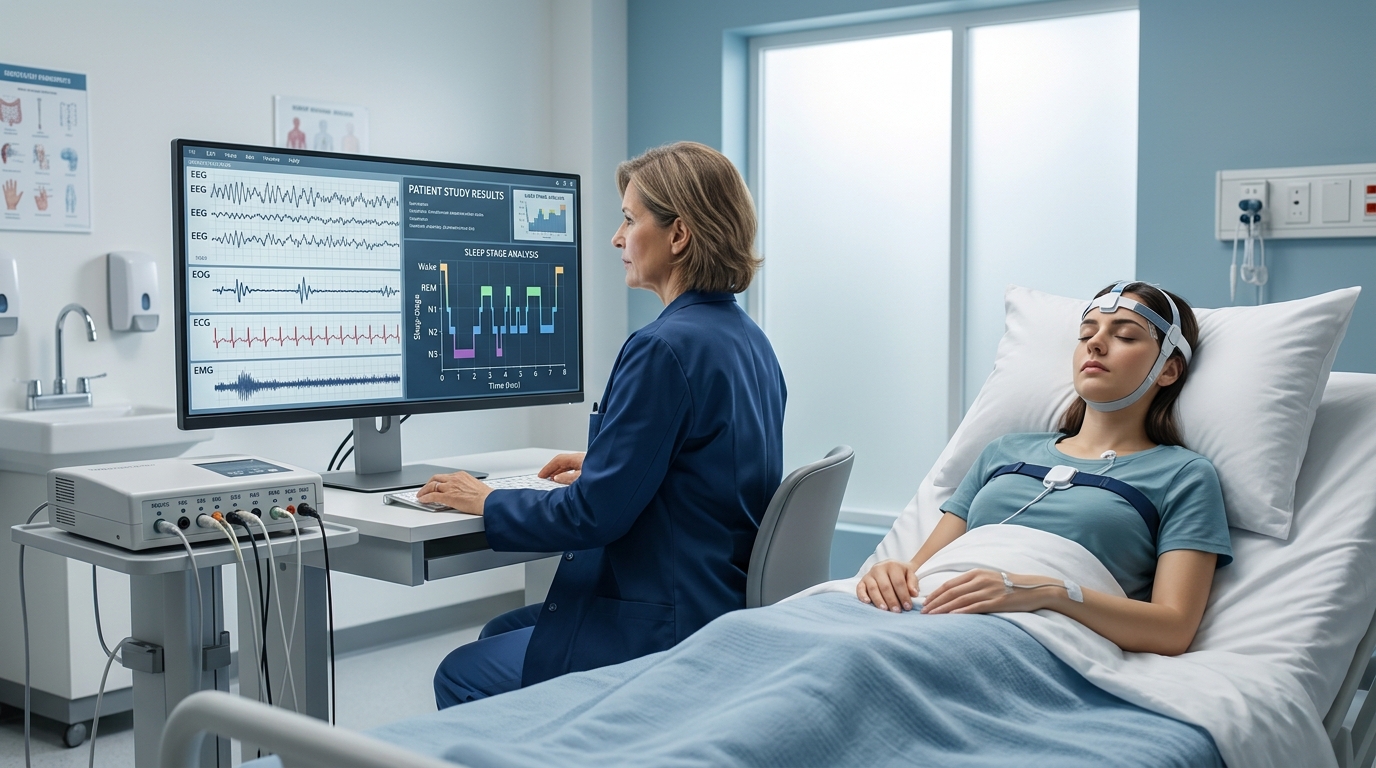
One of the important tests used during the evaluation of suspected narcolepsy is overnight polysomnography, commonly known as a sleep study. During this test, several physiological signals are monitored while you sleep. The purpose is to examine your sleep and identify other conditions that could explain your symptoms.
Polysomnography can monitor brain activity, eye movements, muscle activity, breathing, heart rate, and other signals associated with sleep. These measurements allow specialists to examine different stages of sleep and identify abnormalities. The test can also help detect conditions such as obstructive sleep apnea, which can cause significant daytime sleepiness.
An overnight sleep study is particularly useful because narcolepsy should not be diagnosed simply because a person feels sleepy during the day. A specialist needs to determine whether another sleep disorder or inadequate sleep could better explain the symptoms. The results of the overnight study can therefore provide important context for the daytime sleep test that may follow.
Understand the Multiple Sleep Latency Test
The Multiple Sleep Latency Test is one of the central tests used when evaluating suspected narcolepsy. It is usually performed during the daytime following an overnight sleep study. The test measures how quickly a person falls asleep during several scheduled opportunities to nap.
During an MSLT, you are generally given several opportunities to sleep at scheduled intervals throughout the day. Sensors are used to determine whether you fall asleep and to identify the sleep stages that occur. The test focuses particularly on sleep latency, which refers to the amount of time it takes to transition from being awake to sleep.
A person with narcolepsy may fall asleep unusually quickly during these scheduled opportunities. Another important finding can be the occurrence of sleep-onset rapid eye movement periods, commonly known as SOREMPs. These occur when REM sleep appears unusually soon after sleep begins. The combination of clinical symptoms and specific sleep-study findings can help a specialist evaluate whether narcolepsy is present.
Why REM Sleep Matters During Narcolepsy Testing
REM sleep is a normal stage of sleep associated with vivid dreaming and particular patterns of brain and muscle activity. Under typical circumstances, REM sleep does not usually occur immediately after falling asleep. During narcolepsy evaluation, however, unusually early REM sleep can be an important diagnostic finding.
Sleep-onset REM periods may occur during the MSLT and can contribute to the diagnostic assessment. An overnight polysomnography may also provide information about REM sleep patterns. However, the presence of an early REM period by itself does not automatically establish a diagnosis of narcolepsy.
Sleep specialists interpret REM-related findings together with symptoms, sleep history, and other test results. Certain medications, sleep deprivation, irregular sleep schedules, and other conditions can influence REM sleep. This is why proper preparation and professional interpretation are important.
Review Your Medications With Your Doctor
Medication review is an important part of narcolepsy testing because some medications can influence sleepiness or alter sleep architecture. Certain medications may affect REM sleep, while others can make you more or less alert during the day. These effects may influence the results of an MSLT or other sleep evaluations.
Your healthcare provider may give you specific instructions about medications before testing. However, you should never stop or change a prescribed medication on your own simply because you are preparing for a sleep study. Any medication changes should be discussed with the healthcare professional managing your care.
Providing an accurate list of prescription medications, over-the-counter products, supplements, and other substances can help your sleep specialist interpret your results appropriately. Being open about your normal caffeine use and sleep habits can also provide useful context.
Rule Out Other Causes of Excessive Daytime Sleepiness
One of the most important parts of narcolepsy diagnosis is determining whether another condition could be responsible for excessive daytime sleepiness. Feeling tired during the day is common and can occur for many different reasons. A sleep specialist therefore considers a broad range of possible explanations.
Obstructive sleep apnea is one condition that can produce substantial daytime sleepiness. It can repeatedly interrupt normal sleep and prevent restorative rest. Other possibilities may include chronic sleep restriction, irregular sleep schedules, circadian rhythm disorders, medication effects, depression, neurological conditions, or other medical problems.
Because several conditions can produce similar symptoms, a detailed evaluation helps reduce the risk of an incorrect diagnosis. The overnight sleep study can be particularly useful for identifying sleep-related breathing problems or other abnormalities that may need to be addressed.
Understand Narcolepsy Type 1 and Type 2
Narcolepsy is generally divided into two major clinical types. Narcolepsy type 1 is associated with cataplexy or evidence of low hypocretin levels in appropriate diagnostic circumstances. Cataplexy involves sudden episodes of muscle weakness while a person remains conscious and can be triggered by strong emotions.
Narcolepsy type 2 involves excessive daytime sleepiness and other characteristic findings but does not include the defining features associated with narcolepsy type 1. The distinction between the two types requires professional evaluation and interpretation of symptoms and testing.
Not everyone with narcolepsy experiences the same symptoms. Some people may have prominent daytime sleepiness, while others may also experience cataplexy, sleep paralysis, vivid dream-like experiences, or disrupted nighttime sleep. A sleep specialist considers the complete clinical picture rather than relying on one symptom.
Consider Hypocretin or Orexin Testing
In selected situations, testing for hypocretin, also called orexin, may be considered. Hypocretin is a chemical messenger involved in regulating wakefulness and sleep. Very low levels of hypocretin in cerebrospinal fluid can be associated with narcolepsy type 1.
This type of testing is not necessary for everyone being evaluated for narcolepsy. It may be considered when the diagnosis is unclear or when specific clinical circumstances make the test useful. Cerebrospinal fluid testing is more invasive than standard sleep studies, so a specialist determines whether it is appropriate.
The availability and use of this testing can vary depending on the healthcare setting. Most people undergoing a narcolepsy evaluation will first have a detailed clinical assessment and appropriate sleep studies.
Understand the Role of Genetic Testing
Genetic testing may sometimes be discussed during a narcolepsy evaluation, but it is not generally sufficient by itself to diagnose the disorder. Certain genetic variations are associated with an increased likelihood of narcolepsy, particularly narcolepsy type 1.
However, genetic associations are not specific enough to confirm that a person has narcolepsy. Many people who carry an associated genetic marker do not develop the disorder. For this reason, sleep specialists rely much more heavily on symptoms and objective sleep testing when making a diagnosis.
If genetic testing is discussed, it should be viewed as one piece of information rather than a standalone diagnostic answer.
Prepare Carefully for Narcolepsy Testing
Preparation can be important because the accuracy of sleep testing depends partly on your sleep habits before the test. Your sleep specialist may ask you to maintain a regular sleep schedule before the evaluation. Keeping a sleep diary can help document whether you are getting sufficient sleep.
You may also receive instructions concerning caffeine, medications, alcohol, and other substances. These instructions can vary depending on the testing center and your individual circumstances. Following the instructions provided by your healthcare team can help produce more reliable results.
Adequate sleep before testing is particularly important. Significant sleep deprivation can cause a person to fall asleep quickly during daytime testing even when narcolepsy is not present. Specialists therefore need information about your sleep pattern before interpreting the results.
What Happens During the Overnight Sleep Study?
An overnight sleep study usually takes place in a specialized sleep laboratory or another clinical setting equipped for sleep monitoring. Sensors are placed on the body to record different physiological signals while you sleep. Although the equipment may initially feel unfamiliar, the goal is to monitor your natural sleep as accurately as possible.
The sensors can record brain waves, eye movements, muscle activity, breathing, heart activity, and other information. The sleep specialist can later review these measurements to determine how you moved through different sleep stages during the night.
The study may also identify interruptions in breathing, abnormal movements, unusual sleep behaviors, or other conditions that could affect daytime alertness. The findings can help determine whether additional daytime testing is appropriate.
What Happens During the MSLT?
The MSLT typically takes place during the day after overnight polysomnography. You will have several scheduled opportunities to sleep while monitoring equipment records your brain activity and other sleep-related signals.
The primary purpose is to determine how quickly you fall asleep under standardized conditions. The test also evaluates whether REM sleep occurs unusually soon after sleep begins. Because the test is performed under controlled conditions, it can provide objective information about your tendency to fall asleep during the daytime.
The results are interpreted alongside your overnight sleep study, sleep history, and symptoms. A single measurement is not generally enough to establish a diagnosis. The complete pattern of findings is more informative.
How Long Does Narcolepsy Testing Take?
Narcolepsy testing can require more than one day because the evaluation often includes an overnight sleep study followed by daytime testing. The preparation period may begin before the laboratory visit, particularly when a sleep diary or regular sleep schedule is required.
The exact timing can vary depending on the sleep center and the testing plan. Some people may need additional evaluation if the initial results are inconclusive or if another sleep disorder is suspected.
Being prepared for the full process can make the experience easier. Asking your healthcare provider what to expect before arriving at the sleep center can help you understand the schedule and any preparation requirements.
Can a Blood Test Diagnose Narcolepsy?
A routine blood test is not generally used as the primary method for diagnosing narcolepsy. Narcolepsy is primarily evaluated through clinical symptoms and specialized sleep testing.
Blood tests may be ordered for other medical reasons when a doctor is investigating excessive sleepiness. These tests can help identify certain medical conditions that may contribute to fatigue or sleep-related complaints. However, they do not replace polysomnography or an MSLT when those tests are clinically indicated for suspected narcolepsy.
The appropriate diagnostic approach depends on the individual person’s symptoms and medical history.
Can Narcolepsy Be Diagnosed Without Cataplexy?
Yes, narcolepsy can occur without cataplexy. Narcolepsy type 2 is characterized by excessive daytime sleepiness and objective sleep-test findings without the defining features of narcolepsy type 1.
This is one reason why the absence of cataplexy does not automatically rule out narcolepsy. A person can have significant daytime sleepiness and other symptoms that require specialized evaluation even without experiencing sudden muscle weakness.
A sleep specialist can determine which diagnostic criteria are relevant based on the complete clinical picture and test results.
Factors That Can Affect Test Results
Several factors can influence sleep-test results. Insufficient sleep before testing can increase daytime sleepiness and potentially complicate interpretation. An irregular sleep schedule can also affect the timing and structure of sleep.
Medications are another important factor. Some medications can suppress or alter REM sleep, while others can affect alertness. Caffeine and other substances may also influence sleepiness or sleep patterns.
Untreated sleep disorders can create additional complications. For this reason, specialists carefully review the overnight sleep study and other available information before reaching a conclusion.
What If the Test Results Are Inconclusive?
Sometimes sleep testing does not provide a clear answer. A specialist may need to review your sleep history, medications, previous testing, and other possible causes of daytime sleepiness. Additional testing or follow-up may be recommended depending on the circumstances.
An inconclusive result does not necessarily mean that your symptoms are not real. It may simply mean that more information is needed before a diagnosis can be established. Sleep disorders can be complex, and careful evaluation can take time.
Keeping track of your symptoms and sleep patterns can be useful during follow-up appointments. Providing accurate information about changes in your sleep or daytime alertness can help your healthcare provider determine the next appropriate step.
When Should You Talk to a Doctor About Daytime Sleepiness?
Persistent excessive daytime sleepiness deserves attention, particularly when it interferes with everyday life. Difficulty staying awake while working, studying, reading, traveling, or performing routine activities can affect safety and quality of life.
You should also discuss symptoms with a healthcare professional if you experience sudden episodes of muscle weakness, repeated sleep paralysis, unusually vivid experiences around sleep, or significant nighttime sleep disruption.
Daytime sleepiness can have many causes, so seeking professional evaluation is more useful than attempting to diagnose yourself based only on symptoms. A healthcare provider can determine whether a sleep specialist or formal sleep testing is appropriate.
Narcolepsy testing may involve several steps because excessive daytime sleepiness can have different causes. The National Heart, Lung, and Blood Institute’s information on sleep deprivation and sleep disorders can help readers understand why healthy sleep and adequate sleep duration are important when evaluating daytime sleepiness. This type of information can provide helpful background while you are preparing for a professional sleep evaluation.
Why Accurate Diagnosis Matters
An accurate diagnosis can help identify the underlying reason for excessive sleepiness and guide appropriate management. Narcolepsy is a chronic condition, but its symptoms can often be managed through a combination of medical treatment, behavioral strategies, sleep scheduling, and ongoing professional care.
Without appropriate evaluation, excessive daytime sleepiness may be attributed to ordinary tiredness or another condition. This can delay recognition of the underlying problem. A structured diagnostic process gives healthcare professionals more information to understand what is happening during both nighttime and daytime sleep.
Diagnosis also helps distinguish narcolepsy from other sleep disorders that may require different approaches. This is why objective testing and specialist interpretation are valuable.
What Happens After a Narcolepsy Diagnosis?
If testing supports a diagnosis of narcolepsy, your healthcare provider can discuss appropriate management options. Treatment is individualized because symptoms and daily circumstances differ from person to person.
Management may involve medication, planned naps, consistent sleep schedules, healthy sleep habits, and strategies designed to improve daytime alertness. A sleep specialist can explain the available options and help determine which approaches are appropriate.
Regular follow-up can also be useful because symptoms and treatment needs may change over time. Keeping your healthcare provider informed about daytime sleepiness, nighttime sleep, medication effects, and other concerns can support ongoing care.
FAQ
What is the main test for narcolepsy?
The Multiple Sleep Latency Test is an important objective test used in the evaluation of narcolepsy. It is commonly performed after an overnight polysomnography. Doctors interpret the results together with symptoms, sleep history, and other clinical information.
Do you need a sleep study to diagnose narcolepsy?
A sleep study is commonly part of the diagnostic evaluation. Overnight polysomnography can help rule out other sleep disorders and provide information needed to properly interpret daytime testing.
Can narcolepsy be diagnosed with an MSLT?
An MSLT can provide important objective evidence when evaluating narcolepsy. However, the result is interpreted together with the person’s symptoms, medical history, overnight sleep study, and other relevant information.
How long does narcolepsy testing take?
The evaluation often involves an overnight sleep study followed by daytime testing. Preparation may begin before the appointment, and additional follow-up may be required depending on the results.
Is there a blood test for narcolepsy?
Narcolepsy is not typically diagnosed through a routine blood test. Diagnosis generally relies on clinical evaluation and specialized sleep testing. In selected circumstances, other testing may be considered.
Can lack of sleep affect narcolepsy testing?
Yes. Sleep deprivation can increase daytime sleepiness and affect sleep-test results. This is why specialists may ask patients to maintain a regular sleep schedule before testing.
Can medications affect narcolepsy testing?
Yes. Some medications can influence sleepiness or REM sleep and may affect test interpretation. Patients should discuss all medications with their healthcare provider and follow specific preparation instructions.
What if I do not have cataplexy?
The absence of cataplexy does not necessarily rule out narcolepsy. Narcolepsy type 2 can occur without cataplexy, and diagnosis depends on the overall clinical picture and objective testing.
Can sleep apnea look like narcolepsy?
Sleep apnea can cause significant daytime sleepiness and may produce symptoms that overlap with narcolepsy. An overnight sleep study can help identify sleep-disordered breathing and other conditions.
Should I diagnose myself based on symptoms?
Self-diagnosis is not recommended. Symptoms such as daytime sleepiness can have many causes. A qualified healthcare professional or sleep specialist can determine whether formal testing is appropriate.
Conclusion
Understanding how to be tested for narcolepsy can make the diagnostic process easier to understand. Narcolepsy is not usually confirmed through one simple test. Instead, healthcare professionals consider symptoms, sleep history, medical information, and objective sleep-study findings.
The evaluation commonly involves an overnight polysomnography followed by a Multiple Sleep Latency Test. These studies can provide important information about nighttime sleep, daytime sleepiness, sleep latency, and the timing of REM sleep. Additional testing may sometimes be considered when the diagnosis remains uncertain or when specific clinical findings require further investigation.
Preparing properly for testing is also important. Maintaining a regular sleep schedule, keeping a sleep diary, discussing medications with your healthcare provider, and following testing instructions can help specialists interpret the results accurately.
If persistent daytime sleepiness, cataplexy, sleep paralysis, or other unusual sleep symptoms are affecting your daily life, discussing them with a healthcare professional is an important step. A proper evaluation can help determine whether narcolepsy or another sleep disorder may be responsible and can provide a foundation for appropriate management and ongoing care.